

Money Service Operator (MSO) License in Hong Kong
Last Update: 03.04.2026
A Hong Kong MSO (Money Service Operator) license is a mandatory permit for businesses that provide currency exchange or money transfer services. It is issued by the Customs and Excise Department (C&ED) under AMLO (Cap. 615) and applies to both physical locations and online platforms.
Any company or individual offering money-changing or remittance services in Hong Kong must obtain this license before starting operations. This requirement applies to both local and foreign-owned businesses.
Operating without an MSO license is a criminal offense. Penalties can reach up to HK$1,000,000 and up to 2 years of imprisonment.
Applications are submitted through the MSOS system and reviewed by the Money Service Supervision Bureau. If documents are properly prepared, approval typically takes around 6–8 months. The license is issued for 2 years and must be renewed before expiration.
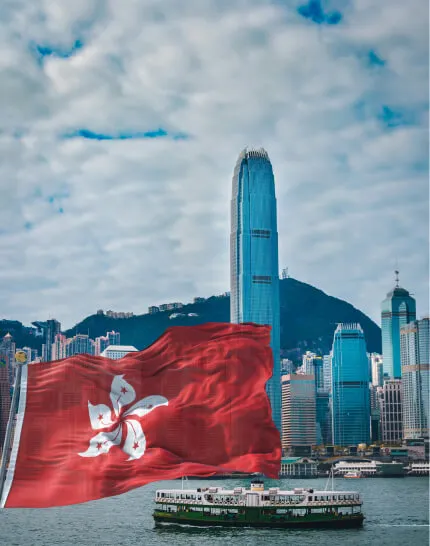
Quick Facts: Hong Kong MSO License
| Parameter | Details |
| Regulator | Customs and Excise Department (C&ED) |
| Law | AMLO (Cap. 615) |
| Activities | Currency exchange and remittance services |
| Application fee | From HK$3,310 + HK$860 per person |
| Renewal fee | From HK$790 (every 2 years) + HK$860 per person |
| Timeline | Typically 6–8 months (up to 10 months in complex cases) |
| Validity | 2 years |
| Minimum capital | Not fixed, must show sufficient funds |
| Physical presence | Required (office in Hong Kong) |
| Key requirement | At least one director must pass exam |
| Compliance roles | Compliance Officer and MLRO required |
| Record keeping | Minimum 6 years |
| Penalty | Up to HK$1,000,000 + up to 2 years imprisonment |
What is an MSO License in Hong Kong?
An MSO license is a mandatory authorization for businesses engaged in currency exchange or money transfers in Hong Kong. It is issued by the Customs and Excise Department (C&ED) under the AMLO (Cap. 615), and without it, it is not possible to operate legally in this sector.
Essentially, if you regularly earn income from money transfers or currency exchange, you need this license. In the law, this is referred to as “money services” and encompasses two types of activity: currency exchange and remittance (transfers). These can be provided separately or together, and a single license is sufficient. It is important to note that the requirements are the same for both offline businesses and online platforms.
This license is not required merely as a formality, but to monitor financial transactions. Companies are obliged to comply with AML/CFT regulations, verify customers and track transactions. The regulator oversees this: it carries out inspections, assesses compliance with requirements and monitors the operations of licensed companies.
However, a single license does not grant complete freedom. It covers only those services and premises specified in the application. If the business expands or the operating format changes, this must be agreed separately with the regulator.
What Services Does an MSO License Cover?
An MSO license covers two main types of activities: currency exchange and money transfers, including online services.
| Service type | What it means in practice | Who typically needs it |
|---|---|---|
| Money Changing | Exchanging one currency to another, in person or online | Exchange offices, fintech apps, travel-related services |
| Remittance | Sending or receiving money across borders | Payment services, transfer platforms, remittance businesses |
If currency exchange is not your main activity (for example, a hotel exchanging money only for guests), a license may not be required. But in practice, this is interpreted strictly, and regular operations usually require licensing.
Also important: an MSO license only covers fiat money services. If your business includes crypto or more complex payment solutions, additional licenses may be required.
Who Needs an MSO License in Hong Kong?
An MSO license is required for any business that regularly provides currency exchange or money transfer services in Hong Kong.
This applies to all types of businesses – individuals, partnerships, companies, including foreign businesses with a local presence. It also does not matter whether the service is provided offline or online. If handling money for clients is part of the business model on a regular basis, an MSO license is usually required.
There are a few exceptions. A license may not be needed if currency exchange or transfers are not the main activity. For example, when a hotel exchanges money only for its guests. In practice, this is interpreted strictly, and most regular operations still require a license.
Some businesses are already regulated under other financial laws, so an MSO license is not required. This includes:
- licensed banks;
- certain financial companies where money services are not the main activity;
- insurance companies and brokers;
- government entities.
It is also important to understand that an MSO license only covers standard (fiat) money services. If the business includes crypto or more complex payment solutions, additional licenses may be required.
What Are the Requirements for an MSO License in Hong Kong?
To obtain an MSO license, a business must meet requirements related to its corporate structure, personnel, physical presence, and compliance framework. The regulator evaluates not only the documents, but also whether the business is capable of operating in line with regulatory standards.
Corporate Structure
The applicant must be a company registered in Hong Kong or a foreign company with a local branch. Shareholders and directors may be both residents and non-residents, provided they successfully pass the required checks.
Fit and Proper Test
All key persons — directors; partners; and ultimate beneficial owners (typically holding 25% or more) must pass a background assessment. This includes review of criminal records; financial history; and bankruptcy status. Failure of any individual will result in rejection of the entire application.
Competence Assessment
At least one director or senior manager must pass a written Competence Assessment administered by the regulator. This is a mandatory requirement specific to Hong Kong. The exam covers AML/CFT rules and compliance procedures.
Failure to pass the exam will result in rejection of the application.
Premises Requirements
The business must maintain a physical presence in Hong Kong, including:
- a specified premises where services are provided;
- a local management office;
- a designated place for storing records and documentation.
All premises must be accessible for inspection. Virtual offices are not accepted.
Compliance Officer and MLRO
The company must appoint a Compliance Officer (CO) and a Money Laundering Reporting Officer (MLRO). These roles must be held by different individuals, who are typically required to be based in Hong Kong and hold a Hong Kong Identity Card. Both must be part of the organization and have relevant experience.
AML/CFT Policies and Business Plan
The application must include structured documentation describing:
- the business model and services;
- the target client profile;
- the risk management approach.
An AML/CFT policy is also required, covering: customer due diligence; transaction monitoring; reporting procedures; and staff training. The regulator evaluates not only the presence of these documents, but also their practical implementation.
Financial Resources
There is no fixed minimum capital requirement. However, the applicant must demonstrate sufficient financial resources to operate the business and meet compliance obligations. This includes available working capital; access to banking; and overall financial stability.
What Documents Are Required for an MSO License in Hong Kong?
To apply for an MSO license, the applicant must prepare a set of corporate; personal; and compliance documents. The regulator evaluates both the completeness and the quality of the submission.
The core document package typically includes:
Corporate Documents
- Certificate of Incorporation;
- Business Registration Certificate;
- Articles of Association;
- Ownership structure chart.
Personal Documents (for all key persons)
- Passport copies;
- Proof of residential address;
- CV or professional background information;
- Declarations and forms for the Fit and Proper Test.
Business and Compliance Documents
- Betailed Business Plan;
- AML/CFT Policy;
- Risk assessment of the business model;
- Internal procedures for client onboarding and transaction monitoring.
Premises Documents
- Lease agreement for the office;
- Description of premises (including LMO and storage);
- Photographs of the office (interior and exterior).
Additional Requirements
- Appointment details of Compliance Officer (CO) and MLRO;
- Evidence of financial resources;
- Confirmation of readiness for the Competence Assessment.
All documents must be accurate; consistent; and aligned with the actual business model. Incomplete or poorly prepared documentation is one of the main reasons for delays or rejection.
How to Get an MSO License in Hong Kong?
Getting an MSO license in Hong Kong is a structured process, but most of the time depends on how well the documents and setup are prepared. The application is submitted through the official MSOS portal, and there is no fixed deadline – timing depends on preparation, inspection, and exam results. In practice, the process looks like this:
Step 1: Set up a company
First, a Hong Kong company must be registered (or a local branch for a foreign business).
Step 2: Define key people
The business must appoint responsible persons, including a Compliance Officer and an MLRO, and choose a senior manager who will pass the required exam. Personal documents for all key persons are prepared at this stage.
Step 3: Prepare documents
This is the most time-consuming step. It includes:
- Business Plan;
- AML/CFT Policy;
- internal procedures and risk assessment.
All documents must match the actual business model.
Step 4: Set up a physical office
A real office in Hong Kong is required. This includes:
- a place where services are provided;
- a local management office;
- a place to store records.
The premises must be ready for inspection.
Step 5: Submit the application
The application is filed through the MSOS portal with all documents and forms. Government fees are paid at this stage and are non-refundable.
Step 6: Pass the exam
One senior manager must pass a competence test from the regulator. Without this, the application will not proceed.
Step 7: Inspection
The regulator will inspect the office to confirm that it meets all requirements.
Step 8: Final review and approval
The regulator reviews the full application, including documents, background checks, and inspection results. Additional questions are common. If everything is in order, the license is issued for 2 years.
How Much Does an MSO License in Hong Kong Cost?
The cost of an MSO license includes government fees and the actual cost of preparing the business for approval.
| Fee | Amount |
|---|---|
| Application fee | from HK$3,310 |
| Fit & Proper test | HK$860 per person |
| Additional premises | HK$2,220 per location |
| Renewal (every 2 years) | from HK$790 |
Government fees are fixed and relatively low, and they are paid through the official system. These fees are non-refundable regardless of the result.
In practice, the main expenses come from setting up the business properly. This includes preparing documents, building AML/CFT policies, arranging a local office, and getting professional support. Most companies spend around HK$50,000-100,000 in total, depending on the structure and number of people involved.
It is also important to consider ongoing costs. After the license is issued, the company must maintain compliance, including AML procedures, monitoring, and staff training. Overall, the state fee is only a small part of the total budget – the key cost is building a structure that meets regulatory requirements.
How Long Does It Take to Get an MSO License in Hong Kong?
In most cases, the process takes around 6–8 months with properly prepared documents. More complex cases or incomplete applications can take up to 10 months.
There is no fixed deadline set by the regulator. The timeline mainly depends on how well the documents are prepared, how quickly the exam is completed, and whether the office passes inspection. Delays often happen when AML policies are incomplete, documents are missing, or the premises do not meet requirements.
It is also important to renew the license on time. The renewal application must be submitted at least 45 days before expiry. Missing this deadline can lead to a gap in licensing, which is considered a violation.
What Are the Ongoing Compliance Obligations for MSO License Holders?
An MSO license requires ongoing compliance, not just at the application stage. The regulator continues to monitor the business through inspections and audits.
Companies must verify clients (CDD), especially for higher-risk transactions, and keep records for at least 6 years. Identity checks are required for transactions above HK$8,000.
Regular reporting is also required. Companies must submit quarterly reports and report any suspicious transactions. Staff training on AML rules must be conducted and documented.
In addition, businesses must pass AML audits and notify the regulator about any important changes, such as new directors, new offices, or changes in services.
Failure to meet these requirements can lead to fines, suspension, or loss of the license.
What Are the Advantages of Obtaining an MSO License in Hong Kong?
An MSO license in Hong Kong gives a company the ability to legally work with money flows – exchange currencies, send and receive international transfers, and build a payment business in a regulated environment.
Hong Kong itself is one of the key financial hubs in Asia. With an MSO license, a company can work with clients across different countries, connect to payment providers, and build relationships with banks. This makes it easier to operate internationally and scale beyond one market.
The regulatory framework is clear and widely recognized. Because it follows FATF standards, banks and partners understand this license and are more willing to work with such companies. In practice, this often means fewer issues when opening accounts or connecting payment infrastructure.
An MSO license is also often used as a starting point. It allows a company to enter the market, build a track record, and then move into more advanced licenses if needed – for example, in payments or digital assets.
From a cost perspective, the entry barrier is relatively low. Government fees are affordable compared to other jurisdictions, which makes it a practical option for launching a regulated money services business.
What Taxes Apply to an MSO Company in Hong Kong?
Hong Kong has a simple and business-friendly tax system. Companies with an MSO license are taxed under the standard profits tax regime.
The corporate tax rate is 8.25% on the first HK$2 million of profit and 16.5% on the remaining amount. Only profits sourced in Hong Kong are taxed – income earned outside Hong Kong may be exempt, depending on the structure.
There is no VAT, no tax on dividends, and no capital gains tax, which makes Hong Kong a predictable and efficient jurisdiction for money service businesses.
How Can Gofaizen & Sherle Help You Obtain an MSO License in Hong Kong?
Gofaizen & Sherle provides full support for obtaining an MSO license in Hong Kong, including company structuring, preparation of documentation, and setup of required compliance roles.
One of the most complex parts of the process is preparing key personnel — especially passing the required exam and setting up compliance roles correctly.
The process typically includes:
- regulatory assessment of the business model and structure;
- company setup in Hong Kong;
- preparation of AML/CFT policies and Business Plan;
- preparation for the Competence Assessment (exam);
- assistance with appointing and structuring Compliance Officer (CO) and MLRO;
- support with office and premises requirements;
- submission of the application and communication with the regulator;
- assistance with bank account opening and payment setup;
- ongoing compliance support after licensing.
It is also important to note that an MSO license does not cover crypto-related activities. If the business involves virtual assets, a separate VASP license is required. We also support clients with crypto licensing in Hong Kong, helping structure the transition to more advanced regulatory frameworks.
With proper preparation, the licensing process is typically completed within 2–3 months, while more complex cases may take longer.
This approach helps avoid common mistakes, reduces delays, and ensures that the application is aligned with regulatory expectations.
Conclusion: Does an MSO License in Hong Kong Fit Your Business?
An MSO license is suitable for companies that plan to work with currency exchange or international money transfers and need a legal, regulated presence in Hong Kong. It is especially relevant for businesses where handling client funds is a core part of the model and access to banks and payment providers is important.
At the same time, the license requires a proper setup. The company must have clear documentation, a physical office, and ongoing compliance processes. Without this, there is a higher risk of delays or rejection during the application.
Overall, an MSO license is a strong option for building a payment business in Hong Kong, but it works best for companies that are ready to meet regulatory requirements from the start and plan to operate long-term.
Frequently Asked Questions about MSO license in Hong Kong
Do I need an MSO license in Hong Kong?
Yes, if a business regularly provides currency exchange or money transfer services. This applies to both local and foreign companies, as well as online platforms.
What is an MSO license in Hong Kong?
It is a mandatory license for businesses that exchange currencies or send money. It is issued by the Customs and Excise Department (C&ED) under AMLO.
How much does an MSO license cost in Hong Kong?
Government fees start from HK$3,310, plus additional fees per person and per office. In total, most companies spend around HK$50,000–100,000 including setup and advisory.
How long does it take to get an MSO license?
In most cases, the process takes around 6–8 months with properly prepared documents. More complex cases can take up to 10 months.
Can a foreigner get an MSO license in Hong Kong?
Yes. Foreign owners and directors are allowed, but a local company or branch must be registered in Hong Kong.
Is there a minimum capital requirement?
No fixed amount is required, but the company must show it has enough funds to operate and meet compliance requirements.
What documents are required for an MSO license?
Key documents include company registration papers, personal documents of owners, a Business Plan, AML policy, and proof of a physical office.
Does an MSO license cover online businesses?
Yes. Online remittance and exchange services are treated the same as physical businesses, but a local office in Hong Kong is still required.
What happens if you operate without an MSO license?
It is a criminal offense. Penalties can reach up to HK$1,000,000 and up to 2 years of imprisonment.
Do I need a separate license for crypto activities?
Yes. An MSO license only covers fiat money services. Crypto-related activities require separate licensing in Hong Kong.
Connect with our experts
Our experts will tell you how to do it as quickly and easily as possible.
By clicking the button, I confirm that I have read the privacy policy and consent to the collection and processing of my personal data in accordance with the GDPR rules.