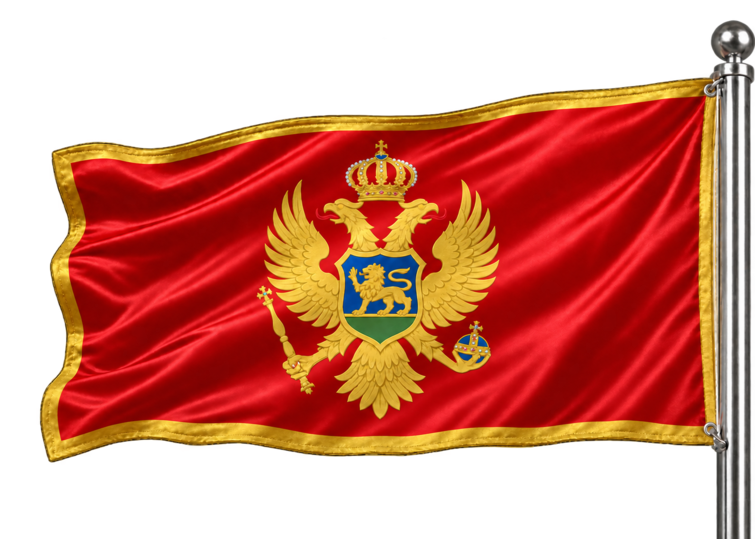
Crypto license in Montenegro
Last Update: 14.05.2026
Get a Montenegro crypto license in 3 months from USD 14,000 — one of the fastest and most cost-effective European-adjacent CASP setups outside MiCA.
Gofaizen & Sherle handles incorporation, CMA registration, AML/KYC documentation, and banking introductions for crypto exchanges, custodians, brokerage desks, and processing services.
A crypto license in Montenegro is a mandatory registration as a Crypto Asset Service Provider (CASP) with the Capital Market Authority (CMA, Komisija za tržište kapitala) under the Law on the Prevention of Money Laundering and Terrorist Financing. The registration permits eight crypto-asset services — including exchange, custody, trading platform operation, brokerage, and crypto-to-fiat conversion — and is designed for crypto startups, exchanges, custodians, DeFi projects, and non-EU companies seeking a European-adjacent setup outside MiCA.
Full registration takes 2–4 months with a one-time government fee of EUR 5,000 (~$5,400), no minimum share capital beyond the standard EUR 1 LLC requirement, and corporate income tax at 9% / 12% / 15% depending on profit bracket. For Montenegro’s position relative to the EU framework, see our overview of the CASP license and the MiCA regulation.
Quick facts: Montenegro crypto license (2026)
| Parameter | Details |
|---|---|
| License type | Crypto Asset Service Provider (CASP) registration |
| Regulator | Capital Market Authority (CMA, Komisija za tržište kapitala) |
| Legal framework | Law on the Prevention of Money Laundering and Terrorist Financing |
| Jurisdiction | Montenegro, outside MiCA, aligned with international AML/KYC standards |
| Processing time | 2–4 months |
| Government fee | EUR 5,000 (~$5,400) one-time state fee |
| Minimum share capital | EUR 1 (general LLC rules apply) |
| Total package with Gofaizen & Sherle | from USD 14,000 (~EUR 13,000), covering government fee, legal services, corporate setup, and AML/KYC documentation |
| Ongoing maintenance | from USD 1,200 (~EUR 1,100) per month, covering compliance officer support, regulatory reporting, and renewals |
| Corporate tax | 9% / 12% / 15% bracket system, no VAT on crypto-asset transactions |
| Banking recognition | Medium — partnerships established on a case-by-case basis |
| EU passporting | No (outside MiCA, registration valid within Montenegro) |
| Permitted activities | Crypto-to-fiat and crypto-to-crypto exchange, custody, trading platform operation, brokerage, OTC, ICO consulting, blockchain payments |
| Target audience | Crypto startups, exchanges, custodians, OTC desks, non-EU companies seeking European-adjacent setup without MiCA |
| AML/KYC | Mandatory: compliance officer, KYC procedures, transaction monitoring, FIU reporting, periodic audits |
Crypto license in Montenegro
Get a Montenegro CASP setup plan from USD 14,000
Full setup in around 3 months end-to-end. Government fee, legal services, AML/KYC documentation, and banking introductions included. Ongoing maintenance from USD 1,200 (~EUR 1,100) per month.
Timeline
2–4 months
Total Budget
from USD 14,000
Who needs a Montenegro crypto license?
A Montenegro CASP registration fits crypto and fintech businesses that need a European-adjacent regulated setup without MiCA passporting and capital requirements. The jurisdiction works for eight main profiles:
- Crypto exchanges (spot and OTC) — both retail-facing platforms and institutional trading desks operating outside the EU MiCA perimeter;
- Crypto custodians — providers offering custody and administration of crypto-assets on behalf of clients;
- Crypto-to-fiat payment processors — businesses bridging fiat and crypto rails for merchant or remittance use cases;
- Brokerage and OTC desks — intermediation between counterparties for crypto-asset trades;
- Crypto wallet operators — providers of hot or cold wallet infrastructure for client funds;
- Token issuers and ICO consulting firms — projects launching token sales within the AML-compliant framework;
- Crypto startups with limited capital — Montenegro’s EUR 1 minimum LLC capital is a fraction of the EUR 50,000+ required under MiCA tiers;
- Non-EU companies (US, MENA, APAC) — businesses seeking a European-adjacent regulated footprint without EU operational requirements.
What are the advantages of a Montenegro crypto license?
Montenegro offers six structural advantages over neighboring MiCA jurisdictions: a registration-based regime (not a full traditional license), 2–4 month setup, low capital, European-adjacent context, transparent public CMA register, and a 9% / 12% / 15% tax bracket without VAT on crypto transactions.
Registration-based regime
Montenegro CASP is a mandatory registration with the Capital Market Authority, not a full traditional license — this means a simpler approval process and lower documentary burden than under MiCA or FINMA frameworks.
Fast market entry
Full setup takes 2–4 months end-to-end when documentation is prepared correctly, one of the fastest timelines among European-adjacent crypto jurisdictions.
Minimal capital
General LLC rules apply with EUR 1 minimum share capital, compared to EUR 50,000+ under MiCA tiers.
European-adjacent context
Montenegro is a candidate for EU accession with a financial framework that mirrors international standards; counterparty trust is materially higher than for offshore jurisdictions.
Public CASP register
All registered providers are listed in the CMA’s public online register, providing third-party verification for banking partners, payment processors, and counterparties.
Favorable tax system
Corporate tax of 9% / 12% / 15% (bracket system), no VAT on crypto transactions, double taxation treaties with major economies.

Contact us now! Get prompt advice and a commercial offer.
What are the disadvantages of a Montenegro crypto license?
A Montenegro crypto license has three practical limitations: no MiCA passporting for EU-wide retail service, medium banking recognition that requires multiple applications, and an ongoing AML/KYC compliance burden starting from USD 1,200 per month.
No MiCA passporting
Montenegro CASP registration does not grant European passporting rights, so direct EU-wide service to retail clients requires a separate MiCA CASP license in an EU member state — see our MiCA CASP license for the EU passporting route.
Medium banking recognition
Montenegro is recognized by banks at a medium level, with crypto-friendly banking partnerships established on a case-by-case basis depending on business model, AML profile, and intended geography. Expect 2–3 banking applications before stable account onboarding.
AML/KYC compliance burden
Companies must appoint a compliance officer, implement KYC procedures, run transaction monitoring, file regular reports to the Financial Intelligence Unit (FIU), and undergo periodic audits. Ongoing maintenance costs from USD 1,200 (~EUR 1,100) per month.

Expert view
Banking is the real timeline driver for Montenegro CASPs, not the registration itself. Plan for 2–3 banking applications in parallel with the CMA process — local banks underwrite case-by-case based on AML profile, source of funds, and target geography. We pre-screen banking partners during step 1, not after the license is issued — that compresses the post-license onboarding to weeks instead of months.
Partner, Head of Sales (Crypto and Blockchain)
What are the requirements for a Montenegro crypto license?
A Montenegro crypto license has four core requirements: a Montenegrin legal entity, a transparent ownership structure verified by the CMA, clean business reputation for all UBOs and directors, and an appointed AML/KYC compliance officer with documented control procedures.
Local legal entity
The applicant must be incorporated in Montenegro as an LLC (DOO) with EUR 1 minimum share capital and a registered address in the country; foreign shareholders and directors are permitted.
Transparent ownership structure
All shareholders, directors, and ultimate beneficial owners (UBOs) are subject to verification by the Capital Market Authority, including identity, source of funds, and corporate chain disclosure.
Business reputation
UBOs, directors, and key personnel must have a clean record: no criminal convictions related to financial crimes, no active sanctions exposure, no involvement in financial misconduct.
AML/KYC compliance officer
The company must appoint a qualified AML/KYC officer (in-house or outsourced), implement an internal control program covering customer due diligence, transaction monitoring, suspicious activity reporting to the FIU, and recordkeeping.
How do you apply for a crypto license in Montenegro?
Applying for a Montenegro crypto license takes 2–4 months across five stages: project planning, company incorporation, document preparation, CMA verification, and entry into the public register.
Step 1: Project planning
Define the scope of crypto activities, target geography, banking strategy, and AML/KYC framework with the Gofaizen & Sherle legal team; preliminary review of UBO structure and source-of-funds documentation.
Step 2: Company incorporation
Incorporate a Montenegrin LLC (DOO) with the chosen ownership structure, deposit the EUR 1 minimum share capital, and open a local bank account for the operating entity.
Step 3: Document preparation and CMA application
Prepare a complete application package: business plan, AML/KYC manual, internal control program, IT and information security policies, UBO and director files, then submit to the Capital Market Authority.
Step 4: CMA verification
The Capital Market Authority reviews corporate structure, UBO and director suitability, AML/KYC compliance program, and IT security setup; Gofaizen & Sherle handles all regulatory correspondence and responds to clarification requests.
Step 5: Entry into the public CASP register
Once approved, the company is entered into the CMA’s public Register of Crypto-asset Service Providers and may begin licensed operations; Gofaizen & Sherle assists with post-license banking introductions and ongoing compliance setup.
Total time: 2–4 months end-to-end (typically around 3 months) when documentation is prepared correctly.
What documents are required for a Montenegro crypto license?
A Montenegro CASP application requires six core document packages: corporate incorporation files, a CMA-ready business plan, share capital proof, an information security and IT infrastructure policy, the AML/KYC compliance program, and UBO and director files.
- Corporate incorporation files — Articles of Association, registration certificate, shareholders’ register, and corporate group structure chart if part of a holding;
- CMA-ready business plan — description of crypto services, target geography, client onboarding flow, revenue model, three-year financial projections, and risk assessment;
- Share capital proof — confirmation of EUR 1 minimum share capital deposited in the Montenegrin bank account (higher capital may be required depending on activity scope);
- Information security and IT infrastructure policy — technical setup of the platform, custody architecture (hot/cold wallet separation), incident response plan, data protection measures, business continuity policy;
- AML/KYC compliance program — customer due diligence procedures, transaction monitoring rules, sanctions screening framework, FIU reporting workflow, internal training plan, and named compliance officer file;
- UBO and director files — identity documents, proof of address, source of funds, professional CV, criminal background certificates for all UBOs, directors, and key personnel.
A complete document checklist tailored to the specific business model is provided by the Gofaizen & Sherle team during the initial consultation.
What activities does a Montenegro CASP license permit?
A Montenegro CASP registration permits eight regulated crypto-asset services and one fiat-side service under the AML law: exchange, custody, trading platform operation, brokerage, ICO consulting, payment solutions, order execution, and client fiat custody.
- Exchange of crypto assets for fiat — crypto-to-fiat services including spot exchange, OTC desks, and on-ramp/off-ramp payment flows;
- Exchange of crypto assets for other crypto assets — crypto-to-crypto trading, swap services, and DEX-adjacent operations within the regulated framework;
- Custody and administration of crypto assets — safekeeping of client crypto-assets, including hot, warm, and cold wallet architectures, with segregation of client funds from corporate funds;
- Operation of a crypto trading platform — running a regulated exchange or matching engine for crypto-asset trades between clients;
- Brokerage and OTC operations — intermediation between buyers and sellers, including large-block OTC trades for institutional clients;
- Token issuance and ICO consulting — advising on compliant token offerings, ICO/STO structuring, and post-issuance secondary market support;
- Blockchain-based payment solutions — payment gateways, merchant acquiring, and cross-border crypto remittance infrastructure;
- Execution of orders for crypto assets on behalf of clients — order routing, execution-only brokerage, and custodian-side trade execution;
- Client fiat custody — holding and managing fiat balances tied to client crypto operations, in line with AML/KYC controls.

How is crypto regulated in Montenegro?
Crypto in Montenegro is regulated by the Capital Market Authority (CMA, Komisija za tržište kapitala) under the Law on the Prevention of Money Laundering and Terrorist Financing, with amendments introducing the CASP framework adopted by the Montenegrin Parliament in February 2025. Montenegro deliberately chose to align with international AML/CFT standards and remain outside MiCA while the country progresses toward EU accession — this gives crypto businesses a clear, harmonized framework without the tier-based capital and governance burden imposed by the EU regulation. The framework evolved from years of sandbox-style operation into the current CASP registration regime in preparation for eventual EU accession.
Montenegro is an independent European jurisdiction that is not part of the European Union but is actively seeking to harmonize its financial and crypto regulations with international standards. For a long time, the legal status of crypto assets in the country was in a “gray area” because there was no separate legislation and such transactions were not explicitly permitted by law.
The situation began to change after the development of specialized legal norms — primarily through amendments to the existing anti-money laundering law aimed at eliminating legal uncertainty and ensuring a more predictable environment for business. These changes introduced the first-ever regulatory framework for crypto assets and transactions in the jurisdiction, defining crypto services and crypto assets as regulated entities, while maintaining the primary focus on preventing financial risks. The amendments aim to bring the national regime into line with the recommendations of the FATF (including Recommendation No. 15), MONEYVAL, and the OECD without introducing a separate crypto law.
The national approach is based on mandatory registration of crypto-asset service providers (CASP) rather than traditional licensing based on EU models or those of major offshore jurisdictions. Registration is required before starting operations in the market and involves compliance with AML/KYC standards and other compliance documentation. In addition, Montenegro also has unlicensed ways of interacting with cryptocurrencies (e.g., through local exchanges), but CASP registration is a mandatory legal procedure for full-fledged operations with clients and financial institutions.
Regulatory authorities
The regulation of the crypto business in the country is carried out through several state institutions, each of which performs specific functions in control and supervision:
The Capital Market Authority (CMA) is the main regulator of the crypto business in Montenegro. The CMA is responsible for creating and maintaining the CASP public online register, which lists all legal entities planning to provide services related to crypto assets. This body supervises compliance with mandatory requirements, analyzes submitted applications, checks the reputation of management and the structure of owners, and has the authority to inspect registered providers.
The Central Bank of Montenegro (CBCG) plays a supporting but important role in the context of financial and AML strategy. It monitors risks associated with financial transactions, issues risk assessment recommendations, cooperates with the CMA and other authorities in implementing AML policy, and participates in interagency working groups on the development of future legislation, including a possible separate law on crypto assets. The CBCG emphasizes that cryptocurrencies are not legal tender in the country.
In addition, the Financial Intelligence Unit (FIU) participates in monitoring and processing reports of suspicious activity, and the Ministry of Finance coordinates the general tax regime, international data exchange, and regulatory compliance with EU accession plans. These bodies work together to collect information, analyze risks, and ensure compliance with AML/KYC standards by all market participants.
Legal framework
The legal framework for regulating crypto assets in Montenegro is based on the Law on the Prevention of Money Laundering and Terrorist Financing, which has been updated to include provisions aimed at regulating crypto services. These changes supplemented the law with provisions on cryptocurrencies, defining crypto assets as digital representations of value or rights that can be transferred and stored using distributed ledger technology (DLT) or similar technologies.
According to Article 145c and related provisions, legal entities and entrepreneurs from Montenegro and other jurisdictions are required to register with CASP before commencing operations. The registration procedure is designed to ensure transparency, customer protection, and compliance with international AML/KYC standards. The law also stipulates that the CMA is required to create and maintain an online registry of crypto-asset service providers.
Currently, Montenegro does not have a separate “crypto-assets law” with detailed rules on tokens, their issuance, or smart contract architecture, as is the case in the EU (MiCA). However, work on a specialized legal act is underway. The government, in cooperation with the CMA and CBCG, is preparing a draft that should further expand the existing legal framework and unify regulation, including issues of information exchange and international cooperation.
What are the ongoing obligations for Montenegro CASPs?
Montenegro CASPs have five ongoing obligations after registration: AML/KYC procedures (customer due diligence, transaction monitoring), regular reporting to the Financial Intelligence Unit (FIU) and CMA, secure custody of crypto-assets, IT and incident-response readiness, and periodic audits with internal recordkeeping. KYC verification is mandatory for every crypto transaction exceeding EUR 1,000 (~$1,080). Ongoing maintenance under Gofaizen & Sherle support costs from USD 1,200 (~EUR 1,100) per month.
Registered CASPs are required to strictly comply with rules aimed at transparency and security in working with clients. A key requirement is the implementation of effective AML and KYC procedures — companies must verify the identity of clients, monitor suspicious transactions, and keep internal records of all operations for the retention period required by Montenegrin AML law. In addition, it is necessary to maintain reliable systems for storing and protecting crypto assets, ensure the security of IT infrastructure, and respond to incidents in a timely manner to minimize the risks of fraud and loss.
Companies are also required to report regularly to regulatory authorities and maintain transparent accounting practices. All processes must be documented, and employees responsible for compliance must be competent and certified.
These obligations are aimed not only at complying with the law, but also at increasing the trust of customers and partners, which is especially important for working in international markets and interacting with financial institutions.
Liability for violating requirements and laws
Failure to comply with Montenegrin crypto business legislation will result in strict measures from regulators.
Companies may face administrative fines, suspension of operations, or even revocation of registration in the event of systematic violations of AML/KYC rules, insufficient protection of customer assets, or failure to provide timely reporting. The regulator assesses both the actions of the company itself and the integrity of its management and key employees. In addition to financial penalties, violations can affect the company’s reputation internationally and make it difficult to access banking and payment services.
How are crypto businesses taxed in Montenegro?
Montenegro taxes crypto businesses under the standard corporate income tax at 9% / 12% / 15% depending on the income bracket, with no separate crypto tax and no VAT on crypto-asset transactions.
- Corporate income tax — 9% on income up to a threshold, 12% on the middle bracket, 15% on the highest bracket; bracket boundaries are set by Montenegrin tax law and updated annually;
- VAT — crypto-asset operations (exchange, custody, trading) are not subject to VAT, which reduces operating costs and simplifies invoicing for retail and B2B clients;
- Capital gains — gains on crypto-asset trading by a corporate entity are included in the standard corporate income base, not taxed separately;
- Double taxation treaties — Montenegro has bilateral DTA agreements with major economies (EU, UK, Switzerland, several MENA and APAC countries), helping international groups avoid double taxation on cross-border crypto income;
- No special crypto tax — there is no withholding tax, no transaction tax, no levy specific to crypto activities; the standard corporate framework applies in full.

Conclusion
A crypto license in Montenegro is a mandatory CASP registration with the Capital Market Authority under AML legislation — not a classic license — making the jurisdiction one of the fastest and most cost-effective European-adjacent options outside MiCA, with full setup in 2–4 months from USD 14,000 and ongoing maintenance from USD 1,200 per month.
Gofaizen & Sherle handles the complete process end-to-end: company incorporation, CMA application, AML/KYC documentation, banking introductions, and post-license compliance, with regulatory experience across more than 40 jurisdictions.
Frequently asked questions about a Montenegro crypto license
What is a crypto license in Montenegro?
A crypto license in Montenegro is an official registration as a Crypto Asset Service Provider (CASP) with the Capital Market Authority (CMA) under the Law on the Prevention of Money Laundering and Terrorist Financing. The registration permits exchange, custody, trading-platform, brokerage, ICO consulting, and payment activities, and is intentionally separate from the EU MiCA framework.
How long does it take to get a crypto license in Montenegro?
A Montenegro crypto license takes 2–4 months end-to-end (typically around 3 months), broken down into roughly 1–2 weeks of planning, 1–2 weeks of incorporation, 1–2 weeks of document preparation, 4–6 weeks of CMA verification, and 1–2 weeks for entry into the public CASP register.
Is there a minimum capital requirement for a Montenegro crypto license?
A Montenegro CASP has no special crypto capital requirement; standard LLC rules apply with EUR 1 minimum share capital. Higher capital may be advisable depending on the activity scope and banking partner expectations.
Can a Montenegro CASP serve EU clients?
A Montenegro registration is valid within Montenegro and does not grant MiCA passporting for EU-wide retail crypto services; cross-border B2B engagement is generally possible subject to local rules, but direct EU retail service requires a separate MiCA CASP license for the EU passporting route.
Who regulates crypto in Montenegro?
Crypto in Montenegro is regulated by the Capital Market Authority (CMA, Komisija za tržište kapitala), which maintains the public Register of Crypto-asset Service Providers under the AML law.
Are AML/KYC procedures mandatory for a Montenegro CASP?
Yes — every Montenegro CASP must appoint a compliance officer, implement customer due diligence and transaction monitoring, file reports to the Financial Intelligence Unit (FIU), and undergo periodic audits.
Is Montenegro suitable for crypto startups?
Yes — Montenegro is one of the most startup-friendly European-adjacent jurisdictions, with EUR 1 minimum share capital, 2–4 months setup, and from USD 14,000 total package with Gofaizen & Sherle support; it is particularly suitable for non-EU founders who want a regulated footprint without MiCA capital requirements.
How much does a crypto license in Montenegro cost?
A Montenegro crypto license costs from USD 14,000 (~EUR 13,000) total with Gofaizen & Sherle support, which includes the EUR 5,000 (~$5,400) government fee, legal services, corporate setup, and AML/KYC documentation. Ongoing maintenance is from USD 1,200 (~EUR 1,100) per month, covering compliance officer support, regulatory reporting, and renewals. The final amount depends on business model complexity, group structure, and AML consulting scope.
Can foreign founders and shareholders apply for a Montenegro crypto license?
Yes — Montenegro permits 100% foreign ownership; foreign shareholders, UBOs, and directors can apply for a CASP registration provided they pass the CMA’s identity, source-of-funds, and reputation checks.
What law governs crypto in Montenegro?
The Law on the Prevention of Money Laundering and Terrorist Financing, together with CMA guidelines on the registration and supervision of Crypto-asset Service Providers.
Is the Montenegro crypto sandbox regime still available?
No — the previous sandbox regime has been replaced by the current CASP registration framework with the Capital Market Authority under the Law on the Prevention of Money Laundering and Terrorist Financing. Crypto businesses that previously operated under the sandbox now register as Crypto Asset Service Providers (CASPs) to continue their activities legally.
Connect with our experts
Our experts will tell you how to do it as quickly and easily as possible.


By clicking the button, I confirm that I have read the privacy policy and consent to the collection and processing of my personal data in accordance with the GDPR rules.