
 Financial
 Real & Physical
 Americas
 Europe
 Asia
Asia

Gambling license in USA
Last Update:
A gambling license in the United States establishes the legal status of a gambling operator and confirms its compliance with the requirements of the chosen jurisdiction. The license is issued at the state level and covers activities in the field of casinos, online gambling, sports betting, poker, and lotteries. The license establishes legal access to the American market, ensures the transparency of financial transactions, and increases trust from partners and regulators.
Gofaizen & Sherle provide turnkey licensing support in the US: determining the appropriate jurisdiction, conducting a compliance audit of the project, preparing the dossier, submitting it, and interacting with the regulator until the license is obtained.
A USA gambling license is an official permit to conduct gambling activities issued by state-level regulatory authorities. There is no unified federal licensing system in the country, and legal regulation is formed by federal acts – the Unlawful Internet Gambling Enforcement Act of 2006 and the Wire Act of 1961, as well as laws of specific jurisdictions.
A US gaming license is required for the following types of operators:
- online and offline casinos,
- bookmaker platforms,
- poker,
- lotteries,
- fantasy sports,
- and iGaming solution providers.
The key licensing authorities are the Nevada Gaming Control Board, New Jersey Division of Gaming Enforcement, Pennsylvania Gaming Control Board, and Michigan Gaming Control Board. Each state determines its own list of acceptable gambling formats, market entry conditions, and applicant requirements. In some jurisdictions, including Utah and Hawaii, gambling is completely prohibited.
Unlicensed activity is considered a violation of federal and local laws. Possible sanctions include blocking payment channels, revoking domains, fines, and criminal prosecution.
At the same time, obtaining a license secures the legal status of the company, facilitates access to banking and payment infrastructure, increases the level of trust from investors and partners, and reduces regulatory risks.
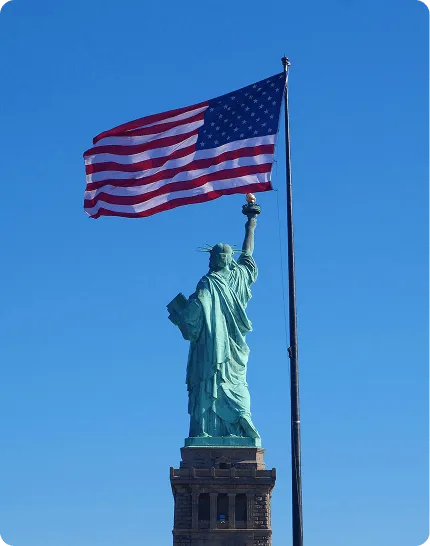
Advantages of obtaining a gambling license in the USA
The main advantages for operators who have completed the licensing process and obtained the right to legally conduct gambling in the USA.
Transparent and legal operation in the US market
A US gambling license is the only way to operate legally in the world’s largest gaming market. Only registered operators can operate within the law, which eliminates the risk of blocking, fines, and criminal liability.
Access to a market with billions in turnover
Licensing opens the door to an industry with more than $50 billion in annual turnover. Once licensed, a company can officially offer its products in popular niches such as casinos, sports betting, lotteries, online games, and eSports.
Reliable payment channels and banks
Licensed operators have the right to open accounts with US banks, connect legal payment gateways, and process transactions without restrictions. This increases trust among customers and investors.
Attractive tax system
Although tax rates vary by state, in most cases, the tax burden is reasonable. On average, it ranges from 8% to 20%. Given the market size and access to a solvent audience, even higher rates do not prevent operators from making a profit.
Reputational advantages
A gaming license in the USA signals to the market and users that the operator meets high standards of security, fairness, and responsibility. This works to build long-term customer loyalty and helps build the brand.
Protecting the interests of players
Licensed platforms are required to comply with fair play rules, ensure data security, and introduce self-control tools (such as betting limits, self-exclusion, etc.). This makes the market more stable and reduces social risks.
Overview of federal and state legislation
There is no single federal gambling license in the United States. The legal regime is based on the “federal framework + state compliance” model. The federation sets the framework (interstate communications, payments, AML/KYC), while actual licensing and operational requirements are determined at the state level (including online casinos, sports betting, poker, lotteries, etc.). Tribal gaming is governed by a separate federal-tribal framework based on the IGRA (Indian Gaming Regulatory Act).
Until 2018, the market was restricted by two federal barriers: the Wire Act of 1961 and the federal moratorium on sports betting (PASPA). In 2018, the US Supreme Court, in the case of Murphy v. NCAA, overturned PASPA and gave states the right to legalize sports betting on their own. This marked the transition to a mosaic map of states with different sets of verticals, tax rates, and licenses. At the same time, the Wire Act remains relevant for interstate communications (especially regarding sports), and its interpretations have evolved through the conclusions of the OLC of the Department of Justice (2011/2018) and subsequent court practice.
Since 2018, legal sports betting has spread to 38 states + the District of Columbia (and in some places, Puerto Rico); the map and statuses are regularly updated by specialized resources.
Examples of how regulators work:
- Nevada Gaming Control Board / Nevada Gaming Commission – a two-tiered oversight model. Its main functions are licensing, control, regulation, and final decisions on licenses.
- New Jersey Division of Gaming Enforcement (NJDGE) / Casino Control Commission – one of the pioneers of iGaming. Main functions – regulations on internet gambling and licensing procedures.
- Pennsylvania Gaming Control Board (PGCB) – supervision of casinos, sports betting, and interactive games; public procedures, forms, and fees.
- Michigan Gaming Control Board (MGCB) – licensing of online games and sports betting, application portal, and updating of platform requirements.
Main federal acts:
- The Wire Act of 1961 prohibits the use of wire communications for accepting bets on sporting events between states. After its reinterpretation in 2011, it applies primarily to sports betting rather than all forms of online gambling.
- The Unlawful Internet Gambling Enforcement Act (UIGEA) of 2006 prohibits payment systems and financial institutions from processing transactions related to illegal online gambling. It does not criminalize gambling itself, but restricts financial transactions.
- The Indian Gaming Regulatory Act (IGRA), 1988 establishes the legal framework for regulating gambling on Indian tribal lands. It defines three classes of games and regulatory mechanisms for each.
- Bank Secrecy Act (BSA) – financial monitoring, AML/KYC obligations, reporting for industry participants (applies in parallel with state licenses).
Key Requirements to Get a USA Gambling License
Each jurisdiction has its own rules and requirements for licensing. However, there are several general rules for obtaining a gaming license in the USA:
- Register a company in the state
- Obtain an EIN (federal tax number)
- Appoint a registered agent in the state
- Open a bank account in the USA
- Provide passports of all founders and owners
- Collect criminal record certificates for all key persons
- Provide credit bureau reports
- Anti-money laundering (AML) policy
- Know Your Customer (KYC) procedures
- RNG (Random Number Generator) certification
- Certification of all games in an approved laboratory (GLI, BMM, eCOGRA)
- Development of a reporting system
- Payment system integrated with licensed processors
- Servers and data are located in the US
- Geofencing system to restrict access by state
- Two-factor authentication
- Data encryption (AES-256)
Types of USA Gambling Licenses
The term “USA Gaming Licenses” generally refers to licenses issued by individual states to regulate gambling activities Since regulations vary from region to region, the types of licenses and the requirements for them depend on the specific state:
| Category | What it is | Who it’s for | How it works | Examples |
|---|---|---|---|---|
| 1. B2C – Operators | Take bets and manage the game. | Online casinos, bookmakers, racetracks. | Requires a basic offline license and a separate iGaming permit for online operations. Often, through a partnership with a land-based casino. | New Jersey – iGaming, Pennsylvania – separate forms, Nevada – Racing / Pari-Mutuel |
| 2. B2B – Suppliers | Provide technology and equipment. | Manufacturers, platforms, payment, and KYC services. | Depending on the role, a full license or registration is required. | Nevada – Manufacturer, Michigan – Supplier, New Jersey – CSIE. |
| 3. Interactive sector | Online services for betting and feeds. | Risk services, IT, data. | Special statuses for online operations. | Nevada – Interactive Operator, Disseminator. |
| 4. Affiliates and marketing | Drive traffic and customers. | Affiliates, agencies. | In some states, a license or notification is required. | New Jersey, Pennsylvania, Michigan. |
| 5. Personnel and key individuals | Manage and control processes. | Management, compliance, risk. | Verification by access level and role. | New Jersey – CCC / DGE. |

Request more information about the USA Gambling License
Procedure for obtaining a gaming license in the USA
Obtaining a gambling license in the United States requires careful preparation. Although requirements vary from state to state, the general structure remains similar. Below are the main steps that operators planning to enter the market usually go through.
Step 1:
First, you need to decide on a state. This could be New Jersey, Nevada, Pennsylvania, or another region where online gambling is already permitted. Incidentally, when making your choice, it is important to consider factors such as the tax burden, market structure, and applicant requirements. In addition, in some states, you will need to enter into a partnership with a land-based casino to access a license.
Step 2:
The next step is to register a legal entity. As a rule, the company must be registered in the selected state, obtain a federal tax number, open a bank account, and appoint a registered agent. In addition, it is recommended to immediately form a team of qualified specialists, including directors and employees responsible for compliance with regulations.
Step 3:
Preparing documents takes a considerable amount of time. Therefore, at this stage, it is important to collect a complete package in advance. It usually includes:
- passports of founders and beneficiaries
- certificates of no criminal record
- tax returns for the last 3-5 years
- financial statements
- business plan with forecasts for several years
- documents confirming the source of funds
- ownership structure
- the company’s statutory documents
- resumes of key employees
- information about the product, games, and bonus policy
However, the list may expand depending on the requirements of the specific regulator.
Step 4:
At the same time, it is necessary to prepare internal policies for compliance with legislation. This includes anti-money laundering measures, customer identification, transaction monitoring, and compliance with sanctions restrictions. In addition, it is important to consider an internal audit and compliance monitoring system.
Step 5:
Simultaneously with the paperwork, the technical part begins. Casino software, payment solutions, and random number generators must be certified by accredited laboratories. In addition, all servers must be physically located in the US and comply with geolocation and data protection requirements.
Step 6:
At the final stage, an application is submitted. You must fill out a form, attach all the prepared documents, and pay the registration fee. After that, a review begins, which may include interviews with management, a financial audit, and an inspection of the servers. If the decision is positive, the license will be issued, and the business will be able to start operating in full compliance with the law.
License Cost and Taxes: Gambling license in the USA
There is no unified gaming license system in the United States and no standardized fees across all states. Fees and taxes depend on the state and type of activity (iCasino, Sportsbook, Poker, B2B/vendors).
License fees (approximate guidelines)
| State | License type (example) | Key initial fees | Notes |
|---|---|---|---|
| New Jersey (NJ) | Internet Gaming Permit for casino licensees | $400,000 + $250,000 Responsible Internet Gaming Fee | Annual renewal: $250,000 |
| New Jersey (NJ) | Sports Wagering License/Permit | Frequent: $100,000 (initial) | Renewal of at least $100,000 |
| Pennsylvania (PA) | Interactive Gaming Certificate Holder (iGaming operator) | $4–12 million (depending on the set of verticals) | Separate fees/registration fees by role |
| Pennsylvania (PA) | Sports Wagering Certificate Holder | $10 million (one-time) | Separate fees for operators/vendors |
| Michigan (MI) | Internet/Sports Betting Supplier | Application $2,500 + license $5,000 (upon issuance) | Annually: $2,500, 5-year renewal $2,500 |
| Nevada (NV) | Manufacturer of Interactive Gaming Systems | $125,000 (for the first year) | Annually thereafter $25,000 |
| New York (NY) | Mobile Sports Wagering — Platform Provider | $25 million one-time (for each platform provider) | Extremely high tax rate (see below) |
Please note that in many states, the actual costs of the regulator (investigation costs) are additionally charged, and for staff/key personnel, there are separate fees for employee licenses (key/occupational).
Taxation also varies depending on the jurisdiction. When planning to open a gambling business in the USA and obtain Gaming Licenses, it is worth considering the different tax rates and conditions.
Examples:
New York (NY), mobile sports betting
- GGR tax: 51% (one of the highest in the US).
There are discussions about lowering the rate, but no changes have been implemented at this time.
New Jersey (NJ), iCasino, and online sports
- Until 06/30/2025: iCasino 15%, online sports 13% (+ local surcharges).
- From 07/01/2025: both rates are 19.75%.
Pennsylvania (PA)
- iGaming: 54% on online slots; 16% on tables and poker (one of the highest for slots).
- Sports betting: 36% effective rate.
Nevada (NV)
- Basic gaming tax on GGR: approximately 6.75% (for sports and casinos). This makes Nevada one of the most advantageous jurisdictions compared to northeastern states.
Future of Gambling in the USA
The gambling market in the USA is developing rapidly. This is facilitated by both increased interest in the industry and the introduction of modern technologies. In addition, the profits of commercial casinos, online games, and betting are growing significantly every year. In 2024 alone, revenues amounted to approximately $51.14 billion.
Sectors expected to grow:
- More states will legalize gambling
- Popularization of games on smartphones
- Introduction of artificial intelligence
- Increased efforts to combat fraud
- At the same time, the popularity of cryptocurrencies is growing, and accordingly, the number of crypto casino platforms will increase

Conclusion
A gambling license in the USA remains a prerequisite for entering the American market. Companies must first register, then develop a business plan, implement internal AML and KYC procedures, certify their software, and undergo regulatory scrutiny. Each state has its own requirements, and each of these jurisdictions has a separate tax scheme. Among the most attractive regions are New Jersey, Nevada, Pennsylvania, and Michigan. Since there is no single federal license, the market remains both complex and flexible, offering new opportunities for expansion.
Legal status allows companies to conduct business transparently, open bank accounts, attract investment, and gain customer trust. The Gofaizen & Sherle team provides comprehensive end-to-end support throughout the licensing process — from selecting the jurisdiction to obtaining the official operating license.
FAQ about USA Gaming Licenses
Is online gambling legal in all US states?
No, there are no uniform rules. Online gambling is regulated at the state level. USA Gambling Licenses are issued where online betting is permitted, such as New Jersey or Michigan. Please note that in several states, gambling is still prohibited or only partially available.
How long does it take to get a US gambling license?
The time it takes to obtain a gaming license in the USA depends on the jurisdiction. It usually takes 3 to 6 months, including background checks on key individuals, finances, and compliance. Nevada and New Jersey have the most stringent processes, but they are also among the most prestigious.
Can foreign operators apply?
Yes, foreign companies can obtain USA Gambling Licenses, but most often they need to register a local legal entity, hire responsible employees, undergo compliance checks, and comply with AML and KYC requirements.
How much does a license cost?
The cost of a gambling license in the USA varies from state to state. The cost starts at $10,000, but the total cost, including lawyers, auditing, platform, and banking, can exceed $500,000. The most expensive licenses are currently in Nevada and New York, especially for casinos.
Which states are the most profitable?
New Jersey, Michigan, Pennsylvania, and Nevada are considered the most profitable, with high GGR, a developed market, and stable demand. If you plan to obtain USA Gaming Licenses, start your analysis with these jurisdictions.






Connect with our experts
Our experts will tell you how to do it as quickly and easily as possible.


By clicking the button, I confirm that I have read the privacy policy and consent to the collection and processing of my personal data in accordance with the GDPR rules.