
 Financial
 Real & Physical
 Americas
 Europe
 Asia
Asia

Forex License in the British Virgin Islands
Last Update:
The British Virgin Islands (BVI) is one of the most reputable and internationally recognized offshore jurisdictions for currency trading licensing. A BVI forex broker license authorises the provision of leveraged trading, CFD services, and investment advisory activities. Gofazen&Sherle specialists will tell you about the requirements, terms, costs, and features of operating a company in this jurisdiction.
The main market regulator is the British Virgin Islands Financial Services Commission (FSC), which, guided by the provisions of the SIBA (Securities and Investment Business Act, 2010), oversees participants’ compliance with key requirements on minimum capital (from $100,000), liquidity, and anti-money laundering (AML) obligations. These measures, along with annual audits, help make sure the environment is transparent and safe for investing, attracting clients, and getting global recognition.
Tax neutrality, recognized reputation, and compliance with AML/CFT/CPF policies, optimal requirements, and speed of processing have attracted many well-known companies, including AVATrade, InstaForex, IFC Markets, easyMarkets, and FIBO Group, to obtain a license from the FSC.
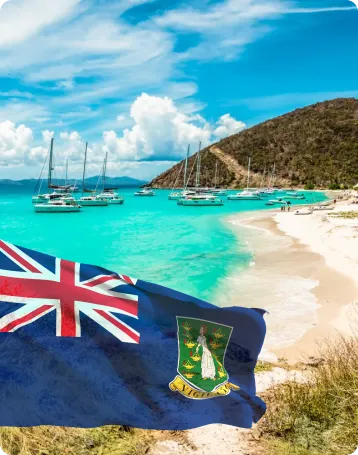
Benefits of a BVI Forex License
A Forex license in the BVI is ideal for companies focused on international markets, investment funds, and startups that want to operate in a jurisdiction with a good reputation, minimal administrative costs, and the opportunity to take advantage of the following benefits:
Tax preferences.
The exemption from income tax, capital gains tax, dividends, interest, and royalties significantly reduces operating costs.
Flexibility and speed of registration.
Compared to other financial centers, it is possible to obtain a license in 3 months if the package of documents is correctly prepared.
No public registers.
Information about key managers and ultimate beneficiaries is not available for public viewing, and it is also possible to use nominee managers and shareholders.
Optimal corporate structure and management.
One director and one shareholder are sufficient to obtain an FSC BVI forex license. Shareholder meetings and company management are permitted online.
International recognition and market access.
This jurisdiction has earned the trust of investors and financial institutions, which significantly reduces the time it takes to open a corporate account and simplifies the process of signing agreements with payment systems and other counterparties.
British Virgin Islands forex regulation
In 2001, the main regulator of the financial market became the British Virgin Islands Financial Services Commission (FSC), which ensures compliance with the regulatory framework for forex broker registration in the BVI based on:
- The SIBA (Securities and Investment Business Act, 2010) is the main regulatory act for conducting investment activities and working with currency contracts.
- The Commercial Companies Act 2004 (amended in 2022) specified the requirements for the name and organizational structure of legal entities.
- The Financial Services Regulations 2008 established the financial reporting regime and deadlines for filing financial statements.
- The Anti-Money Laundering (AML) Regulations 2008 specify the need to implement KYC when working with clients.
- The Memorandum of Understanding with the EU ensured the possibility of information exchange between regulatory authorities.
Requirements to Get a Forex License in BVI
The main forex licensing requirements in BVI are laid down in the SIBA Act and the FSC regulations and procedures, according to which the following is required:
Legal registration of the business.
The company must be registered on the islands in accordance with local legislation (a registration agent and legal address are required). The most common legal forms are Business Company (BC), IBC, and LLC.
Management structure.
The company must appoint at least one director who must pass the FSC’s fit and proper assesssment, have a good reputation (not be included in sanctions lists, not have a criminal record), and confirm their professional experience.
Financial capital.
To obtain a BVI offshore forex license, the company must demonstrate initial paid-up capital of between $100,000-500,000 (depending on the type of activity, risks, and business model).
Compliance and key personnel.
The company must provide developed AML/CFT procedures, risk management, and internal control policies, and appoint an AML manager (mandatory interview with the FSC).
Reliable technical infrastructure.
It is important for the Regulator that the licensee uses a secure trading platform with the ability to monitor the execution of transactions and compile reports, with implemented measures to respond to cyber threats, SSL/TLS encryption, data backup, and integration with AML/CFT systems.
Process to Obtain a Forex Broker License in BVI
Obtaining a BVI financial services license depends on the accuracy and completeness of the documents submitted in accordance with the company’s chosen business model and license type. The entire process of how to get a forex license in BVI takes place in several stages:
Step 1: The Forex company set up BVI.
Depending on the business development strategy and its management, it is necessary to choose the most suitable organizational and legal form: BC, IBC, LLC, etc.
Step 2: Preparation of specialized documents.
The FSC is provided with the most detailed package of documents, including:
- A business plan describing the development of the business, main services and markets, marketing strategies, and IT platforms.
- Confirmation of the source of initial capital.
- Certificate of incorporation, shareholder resolutions appointing directors, agreements, and statutory registers.
- Documents for KYC verification of founders and directors: passports, proof of residence, evidence of good reputation (no criminal record or sanctions), work experience, and necessary qualifications.
- Proof of payment of the state fee.
Step 3: Development of AML/CFT policies.
The FSC requires confirmation that the company will comply with all applicable FATF-AML/CFT/CPF standards in its activities, has developed risk management and customer fund protection policies, and ensures timely notification of the Regulator about suspicious transactions and fraudulent activities of customers.
Step 4: Application to the FSC.
The FSC conducts a comprehensive review of the submitted documents, evaluates the company’s business plan and financial stability, and interviews key managers and shareholders.
Step 5: Obtaining a license.
Depending on the type of activity and risks, the FSC may require insurance, which will only provide additional protection in further work. The license is valid for one year and is renewable annually, subject to compliance with requirements for financial reporting, auditing, and the application of AML/CFT procedures.
Step 6: Bank account.
Licensed companies have access to a wide range of banking services from local and international financial institutions such as FCIB, Bank of Asia, HSBC, DBS, OCBC, as well as payment services such as Payoneer or Airwallex.

Find out more about the Forex license in the BVI
What Type of Forex License is Available in BVI?
There are various categories of licenses for conducting forex business in the British Virgin Islands. Each of them has its own characteristics and advantages. The choice of the appropriate type of license depends on the specifics of the services provided by the company:
The licensee acts as an agent and intermediary between the buyer and seller, facilitating the conclusion of contracts and acting on behalf of the client.
The licensee is the principal and may trade for their own money, buying and selling at an independently determined price.
The licensee has the right to interact with Category 1 licensees by referring their clients, but does not have the right to engage in direct trading activities.
The holder of this license has a wide range of investment opportunities, including the right to act on behalf of clients in concluding transactions and advising them on the implementation of transactions.
This license allows companies to operate with a focus on providing advice on investing and trading in the Forex market, but does not give them the right to execute transactions.
Tax regime
The British Virgin Islands is one of the leading jurisdictions for opening companies (more than 360,000, 25,000 per year), with more than 2,102 investment funds already registered and 11% of all global crypto funds also registered here.
These indicators were achieved through the introduction of the Commercial Companies Act 2004 and the adoption of:
- 0% income tax.
- No VAT or sales tax.
- 0% corporate tax.
- No tax on dividends, royalties, or interest.
- No currency controls.
Companies must pay government license fees and annual registration fees, which depend on the type of license and type of activity.
Conclusion
The BVI has long been recognized as a top jurisdiction for state business registration. Adaptation to global AML/CFT standards, ease and speed of registration, and a favorable tax climate with data confidentiality have ensured recognition and legitimacy in the international market. Regulation by the FSC through SIBA rules has established a clear regulatory framework for lawful and transparent operations, facilitating investment attraction and cooperation with banks, hedge funds, IT companies, and payment services providers.
FAQ about Forex License in the British Virgin Islands
Do I need a license for forex activities in the BVI?
Yes, foreign currency trading is considered an investment activity, which is strictly regulated by the FSC.
How long does it take to obtain a Forex license?
The process of reviewing documents, conducting interviews, and analyzing data can take from 3 to 6 months.
How long is the license valid for?
The license is indefinite, but it must be renewed annually with the payment of all necessary government fees, confirmation of compliance with financial stability standards, full implementation of AML/CFT policies, and accurate balance sheet and financial reporting.
Is the company’s profit subject to taxation?
No, the jurisdiction is tax-neutral, which allows you to take advantage of zero taxation.
What is the minimum authorized capital required?
The amount of initial capital depends on the type and risks, scale of operations, from $100,000 to $500,000 is required to start a business.




Connect with our experts
Our experts will tell you how to do it as quickly and easily as possible.


By clicking the button, I confirm that I have read the privacy policy and consent to the collection and processing of my personal data in accordance with the GDPR rules.