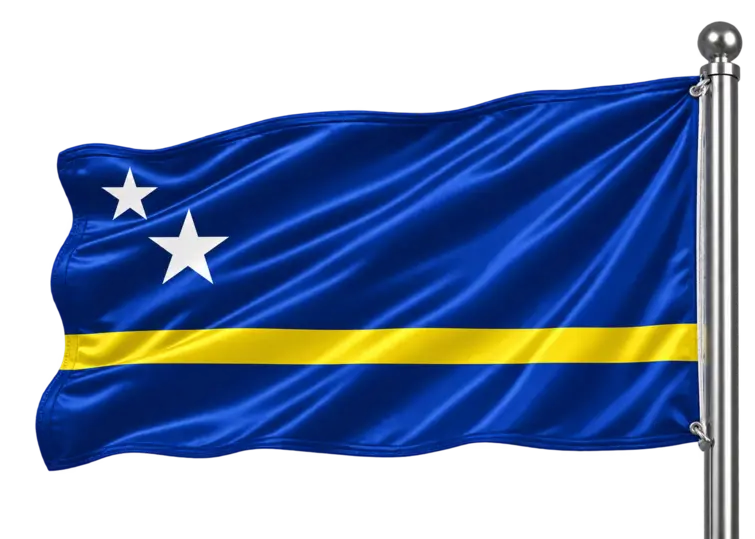
gambling license curacao

Gambling License in Curacao

Last Update: 18.03.2026

A Curacao gambling license offers access to a globally recognized online gaming jurisdiction, favored for its flexible regulatory framework, international reach, and cost-efficient licensing process. The country provides a unified license covering casinos, sportsbooks, and other interactive gambling platforms.

Gofaizen & Sherle assists operators at every stage: from regulatory assessment and license strategy to application management and long-term compliance support.

Curacao is one of the most accessible jurisdictions for online gambling operators worldwide, combining operational flexibility with recognized legal credibility. The licensing system is designed to accommodate both startups and established operators seeking to offer casinos, sports betting, and other interactive gaming services. While licensing ensures lawful operations, it also provides operators with a reliable framework for compliance, technical standards, and responsible gaming.

In this guide, you will learn:

  • Whether online gambling is legally permitted in Curacao;
  • The types of online gambling licenses available;
  • Eligibility criteria, costs, and typical timelines;
  • Ongoing regulatory obligations and compliance requirements.

Regulatory Background: The Role of the Curacao Gaming Control Board

Historically, the Curacao Gaming Control Board (GCB) oversaw land-based gaming operations, including casinos and lottery activities. While the GCB does not directly issue online gambling licenses, it has played a complementary role in supervising the gaming sector and providing regulatory guidance to ensure operational integrity across all licensed activities.

For online operators, the regulatory authority is now more centralized under the Curaçao Gaming Authority (CGA), which implements the government’s online gambling framework. The CGA ensures that operators comply with licensing requirements, technical standards, and responsible gaming protocols. Compliance includes anti-money laundering (AML) safeguards, fair gaming audits, and secure payment processing.

Operators seeking to launch in Curacao rely on this oversight for legal protection and international credibility. By following the CGA framework, businesses can demonstrate adherence to global best practices, which is increasingly important for payment processors, software providers, and international banking partners.

Licensing Framework: NOOGH and LOK

Curacao’s online gambling system is governed by two key legislative instruments:

  • NOOGH (National Ordinance on Games of Chance, 1993) – This ordinance laid the groundwork for online gambling regulation, establishing the initial master-license model and defining legal parameters for wagering and interactive gaming.
  • LOK (Landsverordening Op de Kansspelen, 2024 revision) – The recent reform modernized the licensing process, replacing the old master/sub-license system with a more streamlined model under direct CGA supervision. LOK specifies application requirements, operational obligations, and compliance expectations for online operators.

The combined effect of NOOGH and LOK provides a clear legal basis for online gambling in Curacao, balancing operator flexibility with regulatory accountability.

Legal Basis for Online Gambling in Curacao

Curacao’s online gambling legality rests on its national ordinances and government-issued directives. The LOK provides a formal legislative framework for operators, while NOOGH underpins operational authority and historical precedent. Together, they establish a robust legal foundation recognized internationally, allowing operators to offer online casinos, sportsbooks, poker, and lotteries under regulated conditions.

Primary legal considerations include:

  • Compliance with AML and responsible gaming requirements;
  • Mandatory adherence to CGA audits and reporting;
  • Recognition of Curacao-licensed operators by international banking and payment providers.

This combination of legislation and regulatory oversight makes Curacao a stable and attractive jurisdiction for online gambling businesses.

Types of Licenses in Curacao

Curacao operates a single, unified online gambling license that covers all interactive gaming activities. Unlike jurisdictions that require separate licenses for casinos, poker, sports betting, or lotteries, Curacao’s unified approach simplifies compliance and reduces administrative complexity. Operators holding a license can offer multiple forms of gaming under a single regulatory framework, making it especially attractive for startups and international brands seeking broad market coverage.

This structure also ensures that all operators meet consistent technical, financial, and responsible gaming standards, helping maintain trust with players, software providers, and payment processors. By centralizing oversight, Curacao can enforce high-quality industry practices while providing operators with operational flexibility.

Temporary License vs. Full License

In Curacao, online gambling operators initially apply for a temporary license, which serves as an interim authorization to begin operations while the full compliance review is conducted. Temporary licenses are typically valid for 12 months and allow operators to launch casinos, sportsbooks, poker rooms, and lotteries under a legal framework recognized internationally.

During this phase, operators must demonstrate adherence to regulatory, technical, and financial standards, including:

  • Verification of corporate documents and ownership structure,
  • Proof of sufficient capital and financial stability,
  • Implementation of anti-money laundering (AML) and Know Your Customer (KYC) procedures,
  • Technical certification of gaming software and secure payment systems,
  • Compliance with responsible gaming and data protection measures.

After completing the temporary license period and successfully passing the full Curaçao Gaming Authority (CGA) review, operators can convert their license into a full, permanent online gambling license. This conversion grants long-term authorization to operate in Curacao and signals compliance and credibility to international partners, payment providers, and players.

The two-stage system balances speed to market with regulatory integrity: operators can start generating revenue quickly while the CGA ensures that long-term license holders meet all legal and technical obligations. This framework has replaced the older master/sub-license model, offering greater transparency, simplified procedures, and direct engagement with the regulatory authority.

Phase-Out of Master Licenses

Curacao’s historical master license system has been officially phased out under the LOK 2024 reforms. Previously, online operators could only obtain licenses through master license holders, creating an additional administrative layer. Today, all online gambling licenses are issued directly by the Curaçao Gaming Authority (CGA), simplifying the process and increasing transparency. This transition eliminates dependency on third-party master licensees, allowing operators to engage directly with the regulatory authority and enjoy a more streamlined licensing experience.

Eligibility and Requirements for obtaining a Curacao gambling license

Curacao maintains a structured yet accessible framework for online gambling operators. To obtain a license, companies must meet both corporate and regulatory criteria, ensuring they are financially stable, technically capable, and compliant with international gaming standards. The eligibility requirements apply to both temporary and full licenses.

Corporate Requirements

Operators must be registered as a legal entity in Curacao or in a recognized foreign jurisdiction. The company structure should demonstrate clear ownership, transparent governance, and a defined management team. Corporate documentation, including articles of incorporation, shareholder registers, and proof of directors, must be submitted to the Curaçao Gaming Authority (CGA).

Regulatory and Compliance Requirements

Applicants must comply with anti-money laundering (AML), counter-terrorism financing (CTF), and Know Your Customer (KYC) standards. This includes implementing policies and systems to prevent fraud, underage gambling, and money laundering activities. Operators must also demonstrate responsible gaming measures, such as player protection tools, self-exclusion options, and secure handling of personal and financial data.

Technical and Operational Requirements

The CGA requires operators to ensure that all gaming platforms and software meet rigorous technical standards. This includes certification of game fairness, security protocols, and reliable payment processing. Regular audits and reporting may be requested to verify continued compliance.

Documentation Checklist

To streamline the application process, operators should prepare the following key documents:

  • Certificate of incorporation and corporate registry details,
  • Identification documents of shareholders and directors,
  • Detailed business plan and operational strategy,
  • AML/KYC and responsible gaming policies,
  • Technical reports and software certification evidence,
  • Proof of financial capacity and capital availability.

Meeting these eligibility and documentation requirements is essential for smooth approval of temporary licenses and subsequent conversion to full licenses. Operators who engage experienced legal and compliance advisors, such as Gofaizen & Sherle, benefit from efficient preparation, fewer delays, and higher chances of successful licensing.

Securing Curaçao Gambling License: A Step-by-Step Walkthrough

Obtaining a Curacao online gambling license involves a structured process designed to balance speed to market with regulatory compliance. Operators progress through multiple stages from initial application to temporary licensing, and finally, full license conversion.

Step 1: Preparing the Application

The licensing process begins with a thorough preparation phase. Operators must gather all required corporate, financial, and technical documentation, including:

  • Certificate of incorporation and corporate registry details;
  • Identification of shareholders and directors;
  • Detailed business plan and operational strategy;
  • AML/KYC and responsible gaming policies;
  • Technical certification of gaming software and platforms;
  • Proof of financial capacity and capital availability.

This stage also involves selecting the appropriate license type (temporary or full) and ensuring that all systems and policies align with Curaçao Gaming Authority (CGA) standards. Proper preparation reduces review time and helps demonstrate compliance from the outset.

Step 2: Submission to the CGA

Once all documentation is complete, the operator submits the application via the official CGA License Application Portal. During this stage, the CGA evaluates corporate compliance, financial stability, technical integrity, gaming fairness, and adherence to AML/KYC and responsible gaming safeguards. Operators may be asked to provide additional information or clarifications as part of the interactive review process, ensuring that all requirements are fully documented before temporary license issuance.

Step 3: Temporary License Issuance

After a successful evaluation, operators are granted a temporary license, usually valid for 12 months. This license allows operators to begin offering online gaming services while the CGA monitors compliance with technical, financial, and regulatory standards. During this period, operators must maintain full compliance with AML/KYC regulations, conduct regular internal audits and record-keeping, demonstrate responsible gaming policies in practice, and ensure continuous software and platform integrity. Temporary licensing reduces market entry barriers and allows operators to generate revenue while completing final compliance requirements for a full license.

Step 4: Full License Conversion

The final stage involves conversion from temporary to full license. The CGA conducts a comprehensive compliance review, which includes:

  • Verification of operational, financial, and technical adherence,
  • Assessment of ongoing AML/KYC and responsible gaming measures,
  • Confirmation of system security and fairness of games.

Upon successful review, the operator receives a full, permanent license, providing long-term authorization to offer online gambling in Curacao. This stage ensures that only fully compliant operators continue operations, maintaining both regulatory integrity and player trust.

Request additional information about the Curacao Gambling License

Timelines and Approval Rates

The overall duration of the Curacao licensing process depends on how well the application is prepared, the completeness of documentation, and responsiveness during regulator review. According to industry sources, the regulator typically reviews a complete application for up to ~2 months, during which corporate documents, financial readiness, technical certification, and AML/KYC measures are evaluated. Once approved, the license is usually issued for 1 year under the LOK framework, subject to compliance requirements.

StageTypical DurationNotesApproval Rate*
Application Preparation2-4 weeksGathering corporate, compliance, and technical documentationN/A
Submission & Regulator Review~6-8 weeksCGA review of full compliance package; additional clarifications may extend this~95% for complete applications
Temporary License Issuance1-2 weeks after reviewTemporary license granted, valid for ~12 months~100% if requirements met
Compliance Period (Temporary)12 monthsOperational and compliance monitoring before full conversionN/A
Full License Conversion Review~4-6 weeksComprehensive evaluation of compliance & technical standards~90–95% for compliant operators

*Approximate rates based on industry performance data for Curacao licensing under the new framework; actual results may vary by case.

Key Points:

  • Many well‑prepared applications can be processed within approximately 6-8 weeks from submission to temporary license issuance, assuming no material deficiencies in documentation and timely responses to regulator queries.
  • The temporary license then provides operators with legal authorization to begin offering services while final compliance standards are verified over a 12‑month period.
  • Conversion to a full license (carried out toward the end of the temporary period) typically adds another 4-6 weeks of regulator evaluation.
  • Costs, Fees & Financial Commitments

    When budgeting for a Curacao online gambling license, operators must account for government fees, regulatory charges, compliance obligations, and ongoing operational costs. Under the new licensing regime (LOK), most fees are standardized, transparent, and payable directly to the Curaçao Gaming Authority or relevant tax authorities. While Curacao remains cost‑competitive globally, total first‑year costs typically reflect both mandatory fees and essential corporate and technical expenses.

    Application and Initial Fees

    Under the updated framework, a non‑refundable application fee is payable at submission, alongside due‑diligence charges for key individuals such as shareholders and directors. Application and initial licensing fees include:

    • Application fee: approx. ANG 9,000 (~€4,600) payable to the regulator upon filing.
    • Due‑diligence fees: ANG 250–500 (~€130-€260) per beneficial owner or key person.
    • Domain/registry fee: typically ANG 500 (~€260) per domain per year.
    • Incorporation and legal documentation: legal entity setup in Curacao generally ranges from €3,000 to €5,000, depending on service provider and corporate structure.

    Annual Regulatory and Maintenance Fees

    Once licensed, operators must pay recurring fees to maintain authorization and regulatory oversight:

    • Annual license fee (CGA): approximately ANG 48,000 (~€24,600) per year.
    • Monthly supervision/oversight fee: ANG 4,000 (~€2,050) per month, included in most B2C fees.
    • Domain fees: ANG 500 (~€260) each year for unlimited domain coverage under the license.

    Optional technical governance and compliance services (audits, reporting) may incur additional costs depending on provider arrangements.

    Capital Requirements, Taxation & Operational Cost Efficiency

    Curacao does not impose a formal minimum capital requirement for most online license applicants, though regulators expect operators to demonstrate sufficient capital and financial stability during review. Corporate tax and operational cost structures include:

    • Corporate income tax: approximately 2% on net profits under Curacao’s territorial tax regime (often achieved via exempt or export‑based corporate structuring.)
    • Gross Gaming Revenue (GGR) tax: historically 0%, but operators should monitor upcoming changes in regulatory interpretation under LOK.
    • VAT or GGR levies: none directly applied to gaming revenue.
    • Operational cost efficiency: Total licensing is among the most competitive globally when compared with major European jurisdictions such as Malta or Gibraltar.

    Typical Total Investment (First Year)

    Real‑world examples from industry guides suggest a first‑year budget that incorporates fees, incorporation costs, technical setup, and essential compliance services:

    • Application + due diligence: ~€4,600-€5,500.
    • Annual license and supervision: ~€24,000-€26,000.
    • Corporate formation (+ local director): ~€3,000-€8,000.
    • Hosting/technical compliance (RNG certification, backup servers): ~€5,000-€10,000.
    • Misc. compliance, reporting, advisory: ~€3,000-€7,000.

    Estimated first‑year investment: approx. €40,000-€60,000+ depending on operational scope.

    Cost Summary

    Cost CategoryTypical RangeNotes
    Application Fee~€4,600One‑time, regulatory
    Due Diligence€130-€260 per key personOne‑time
    Annual License Fee~€24,600Recurring
    Monthly Supervisory Fee~€2,050Recurring
    Domain Fee~€260/yearRecurring
    Company Formation~€3,000-€5,000One‑time
    Technical Compliance & Hosting€5,000-€10,000+One‑time/recurring
    Total First‑Year Budget~€40,000-€60,000+Includes licensing + setup

    Ongoing Obligations

    Obtaining a Curacao gambling license is only the beginning; operators must meet continuous regulatory and operational obligations to maintain compliance and preserve their authorization. The Curaçao Gaming Authority (CGA) monitors licensed operators to ensure that technical standards, financial integrity, and responsible gaming measures remain consistently enforced.

  • Compliance Reporting and Audits
  • Operators are required to maintain accurate records of their gaming operations, including financial statements, player transactions, and operational logs. Regular reporting to the CGA ensures transparency and demonstrates adherence to licensing conditions. Additionally, the CGA may request audits of gaming software, platforms, and back-office systems to confirm fair play and technical integrity.

  • Responsible Gaming Measures
  • Curacao-licensed operators must implement policies that protect players, including tools for self-exclusion, deposit limits, and problem gambling support. Ensuring that anti-money laundering (AML) and Know Your Customer (KYC) procedures are consistently applied is also a core obligation, helping prevent fraud and ensuring regulatory compliance.

  • System and Software Maintenance
  • Maintaining secure, certified, and reliable gaming software is mandatory. Operators must ensure the ongoing integrity of Random Number Generators (RNGs), secure payment processing, and data protection measures. Any system upgrades or changes must be documented and may be subject to regulatory verification.

    Suspension & Revocation

    Curacao online gambling licenses may be suspended or revoked if operators fail to comply with regulatory requirements. Common triggers include breaches of AML/KYC obligations, failure to maintain responsible gaming standards, misreporting financial or operational data, or using uncertified gaming software. Technical failures that compromise game fairness or player security, as well as unresolved complaints or fraudulent activity, can also prompt regulatory action. The Curaçao Gaming Authority (CGA) may issue warnings or require corrective measures before full revocation, but repeated or serious violations can result in permanent license termination, prohibiting further operations within the jurisdiction.

    Advantages and Risks of the Curacao Licensing Jurisdiction

    Curacao remains a popular jurisdiction for online gambling operators due to its fast licensing, cost-efficiency, and international credibility. However, like any regulatory environment, it comes with potential challenges. Understanding both the advantages and risks helps operators make informed strategic decisions when entering this market.

    AdvantagesRisks / Challenges
    Fast and streamlined licensing processLimited local legal enforcement in international disputes
    Low annual licensing and operational costsPerception of “offshore” status by some partners
    Single unified license covering all gambling typesReputation risk if compliance lapses occur
    Direct oversight by CGA under updated LOK frameworkCurrency fluctuations may affect cost efficiency
    No formal minimum capital requirementPotential delays in full license conversion if documentation is incomplete
    International market access, including EU and LATAM players

    Expert Guidance for a Smooth Curacao Licensing Journey

    Obtaining a Curacao online gambling license involves several stages, from initial eligibility assessment to ongoing compliance, which can be challenging for first-time applicants. Professional legal and compliance advisors play a crucial role in simplifying the process, minimizing errors, and ensuring operators meet all regulatory requirements efficiently.

    Gofaizen & Sherle provides comprehensive support for clients pursuing a Curacao license.

    Key services include:

    • Document Preparation: Assistance in gathering and verifying corporate, financial, and personal documentation, including incorporation records, shareholder information, financial statements, and technical certifications required by the Curaçao Gaming Authority (CGA).
    • Regulatory Liaison: Acting as a direct intermediary with the CGA, ensuring proper submission of applications, timely responses to inquiries, and professional communication throughout the review process.
    • Ongoing Compliance Support: Post-license, advisors help operators implement AML/KYC procedures, responsible gaming policies, and reporting mechanisms, maintaining long-term regulatory adherence.

    With expert guidance, operators reduce the risk of delays or rejections and gain confidence in managing their Curacao license. This support is especially valuable for international operators navigating local regulatory requirements and emerging compliance standards.

    Curacao Online Gambling License: Summary

    Curacao offers a single, unified online gambling license suitable for casinos, sportsbooks, poker, and lotteries. Operators begin with a temporary license, typically valid for 12 months, which can be converted into a full license upon successful compliance review. Licensing is cost-efficient, with first-year investments ranging from €40,000-€60,000, low corporate taxation, and streamlined application procedures. Ongoing obligations include AML/KYC compliance, responsible gaming measures, financial and operational reporting, and software integrity audits. While the jurisdiction provides fast market entry and international reach, operators must remain vigilant, as non-compliance, technical failures, or misreporting can lead to license suspension or revocation.

    Key Information Table

    CategoryDetails
    RegulatorCuraçao Gaming Authority (CGA)
    License TypeUnified online gambling license (temporary → full)
    Application Fee~€4,600
    Annual Fee~€24,600
    Capital RequirementNo formal minimum; financial stability required
    License ValidityTemporary: 12 months; Full: permanent
    TimelinesApplication to temporary: 6-8 weeks; Full conversion: 4-6 weeks
    Key ObligationsAML/KYC, responsible gaming, financial reporting, software audits

    FAQ about Curacao Gaming License

    Is online gambling legal in Curacao?

    Yes. Curacao allows licensed operators to offer online casinos, sportsbooks, poker, and lotteries under the unified license system regulated by the Curaçao Gaming Authority (CGA). Compliance with AML/KYC and responsible gaming standards is mandatory.

    What types of online gambling licenses are available?

    Curacao issues a single unified online gambling license covering all types of interactive gaming. Operators start with a temporary license, which can later be converted into a full, permanent license after completing the compliance review.

    How long does it take to obtain a license?

    The process typically takes 6-8 weeks from application submission to temporary license issuance. The temporary license is valid for 12 months, after which full license conversion usually takes an additional 4-6 weeks.

    What are the costs and fees for a Curacao license?

    Initial fees include an application fee (~€4,600) and due diligence fees for key individuals. Annual license and supervisory fees are approximately €24,600/year, with additional costs for company formation, software certification, and ongoing compliance. Total first-year investment typically ranges from €40,000-€60,000+.

    What ongoing obligations do license holders have?

    Operators must submit financial and operational reports, maintain AML/KYC procedures, implement responsible gaming measures, secure software and payment systems, and promptly report any regulatory breaches or system issues.

    Under what circumstances can a license be suspended or revoked?

    Licenses may be suspended or revoked for non-compliance with AML/KYC obligations, failure to maintain responsible gaming policies, technical or financial irregularities, fraudulent activity, or misreporting. Serious or repeated violations can result in permanent license termination.

    Connect with our experts

    Our experts will tell you how to do it as quickly and easily as possible.

    Kiryl Zaremba
    Senior Associate, Business Development Manager (FX & iGaming)
    Leonid Turok
    Principal, Head of Sales (FX and iGaming)
    Estonia

      By clicking the button, I confirm that I have read the privacy policy and consent to the collection and processing of my personal data in accordance with the GDPR rules.

      Connect with our experts

      Our experts will tell you how to do it as quickly and easily as possible.

      Estonia

        By clicking the button, I confirm that I have read the privacy policy and consent to the collection and processing of my personal data in accordance with the GDPR rules.

        Thank you

        Thank you for reaching us. Our team is working on your request, and we will contact you soon.