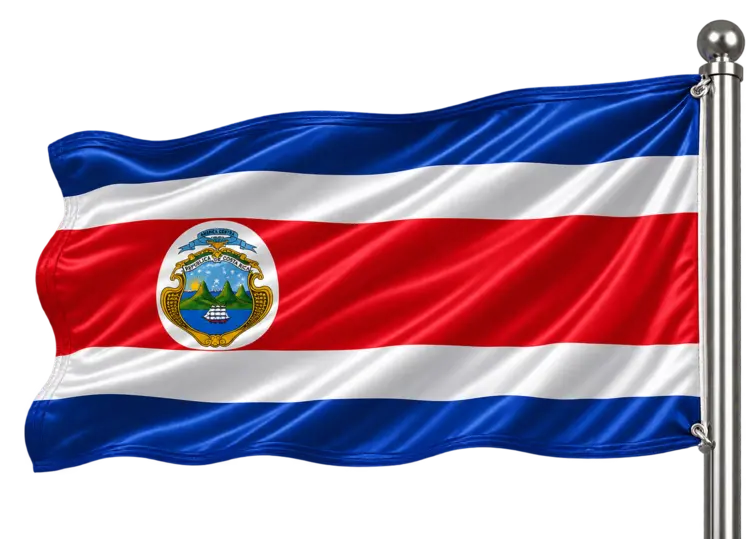
gambling license costa rica

Costa Rica Gambling License

Last Update: 18.03.2026

A Costa Rica gambling license remains one of the fastest ways to launch an online betting or casino platform in the offshore market. The jurisdiction is known for its flexible regulatory environment, relatively low setup costs, and straightforward business registration procedures. Many startups and international operators choose Costa Rica to enter the global iGaming sector quickly while maintaining operational freedom.

Gofaizen & Sherle assists clients throughout the process, from company incorporation to obtaining the required data processing permit and preparing compliance documentation.

Costa Rica has become an attractive hub for multinational companies, leveraging its highly educated population, modern services, and socio-political stability. As a full member of both the World Trade Organization (WTO) and the Organisation for Economic Co-operation and Development (OECD), the country adheres to rigorous international standards, building trust with investors and partners in Europe and the US.

This stable environment has made Costa Rica a popular base for online gambling startups targeting international markets. While the industry remains unregulated and cannot serve the local market, businesses operate using a corporate structure combined with a municipal data-processing authorization. This flexible model, combined with minimal startup costs, attracts companies seeking fast market entry and a testing ground for new ideas.

In this guide, you will learn:

  • How the Costa Rica licensing model actually works;
  • The legal status of online gambling in the country;
  • Requirements, costs, and timelines for launching an operation;
  • The advantages and potential limitations of this jurisdiction.

What Is the Costa Rica Data Processing License

A Costa Rica gambling license is not a traditional gaming permit issued by a national gambling regulator. Instead, operators typically rely on a data processing license, which authorizes a company to manage and process betting-related information from servers located in the country. This structure has historically allowed international gambling businesses to base their operations in Costa Rica while targeting players in foreign markets.

Under this model, a company establishes a local entity and obtains a municipal authorization confirming that its activities involve digital data processing rather than domestic gambling services. Because of this legal interpretation, operators are generally expected not to offer betting services to residents of Costa Rica, focusing instead on offshore audiences.

The framework emerged due to the absence of a centralized gambling regulator in the country. Rather than introducing a dedicated licensing regime, authorities allow businesses to operate if they comply with corporate registration rules, municipal permits, and general commercial legislation.

How the Model Works in Practice

In practice, the Costa Rica approach functions as a business authorization rather than a strict regulatory license. Once established, a company can operate an online gaming platform, manage betting software, and provide related services internationally.

Key characteristics include:

  • registration of a Costa Rican legal entity;
  • obtaining a municipal data-processing permit;
  • hosting or managing gambling-related software and services;
  • targeting players outside the country.

This setup has been widely used by offshore sportsbooks, online casinos, poker platforms, and betting technology providers.

Key Limitations of the System

While flexible, the Costa Rica model also has clear limitations that operators must understand:

  • it is not considered a fully regulated gambling license in many jurisdictions;
  • international payment providers may apply additional compliance checks;
  • operators must restrict access for Costa Rican residents;
  • regulatory oversight is relatively limited compared to major licensing hubs.

For these reasons, many companies use Costa Rica as a launch jurisdiction or operational base, later expanding into more heavily regulated markets once their platform grows.

Types of Gambling Activities Allowed

Companies operating under the Costa Rica model typically structure their activities as international gaming services supported by locally registered businesses. Since the country does not issue a traditional gambling license, operators generally focus on providing betting platforms and related services for players located outside Costa Rica. This flexible framework allows businesses to launch a variety of iGaming products, provided their operations comply with corporate regulations and municipal permissions.

Common gambling verticals operated from Costa Rica include:

Gambling ActivityDescription
Online CasinosPlatforms offering slots, table games, and live dealer products to international players.
Sports BettingPre-match and live betting on global sporting events through online sportsbooks.
Poker PlatformsOnline poker rooms hosting tournaments and cash games.
eSports BettingWagering on competitive gaming tournaments and leagues.
Fantasy SportsSkill-based contests built around sports statistics and player performance.
Crypto Gambling PlatformsCasinos and betting sites accepting cryptocurrencies as payment methods.

Who Should Consider This Jurisdiction

Costa Rica is typically chosen by operators seeking a fast and flexible entry into the online gambling market. The jurisdiction is particularly suitable for startups, technology-driven betting platforms, and companies testing new markets before applying for stricter licenses. It can also work well for crypto-focused projects and white-label casino operators that need a cost-efficient operational base. However, businesses planning to target heavily regulated markets often use Costa Rica as a temporary launch jurisdiction before transitioning to more recognized licensing frameworks.

Why Operators Choose Costa Rica

Despite the emergence of stricter gambling regulators worldwide, Costa Rica remains a popular operational base for many online gambling businesses. The jurisdiction offers a relatively simple market entry process, lower setup costs compared to fully regulated licensing regimes, and flexibility in how companies structure their international operations. For startups and expanding operators, these factors can significantly reduce the time required to launch a betting platform.

Another important aspect is the country’s long history as a hub for sportsbook and online gaming support companies. Over the years, a professional ecosystem has developed around the industry, including hosting providers, software developers, and payment intermediaries familiar with gambling businesses.

Key advantages include:

  • Fast market entry – companies can typically establish operations within a few weeks.
  • Lower setup costs – registration and operational expenses are generally lower than in major regulated jurisdictions.
  • Operational flexibility – businesses can structure international betting platforms without extensive regulatory procedures.
  • Established iGaming environment – Costa Rica has decades of experience hosting sportsbook and casino support operations.
  • Crypto-friendly business climate – many operators integrate digital assets into payments and platform infrastructure.
  • Simple corporate setup – company formation procedures are straightforward compared to heavily regulated markets.

For these reasons, Costa Rica is often used as a practical starting point for new gambling ventures or as a base for companies serving global audiences.

Requirements to Start a Gambling Business in Costa Rica

Launching an online gambling operation from Costa Rica requires establishing a compliant corporate structure and obtaining the necessary municipal authorization for data processing activities. Although the jurisdiction does not issue a traditional gambling license, authorities still expect companies to follow corporate, administrative, and compliance requirements before beginning operations.

Below are the main elements operators must prepare before launching their platform.

Corporate Structure Requirements

The first step is registering a local legal entity that will operate the gambling-related services. Most operators establish either a Sociedad Anónima (S.A.) or a Sociedad de Responsabilidad Limitada (S.R.L.), which are the most common business structures used by international companies.

Typical corporate requirements include:

  • incorporation of a Costa Rican company,
  • registration with the National Registry of Costa Rica,
  • appointment of directors and shareholders,
  • a registered legal address within the country,
  • a local corporate agent or representative.

This entity becomes the official operator of the platform and the holder of the municipal authorization required for business activities.

Operational Setup

Once the company is formed, the business must demonstrate that its activities are structured as international data-processing or online service operations rather than domestic gambling services. In practice, this means the platform infrastructure, payment systems, and customer support processes must be organized to serve players outside Costa Rica.

Key operational expectations generally include:

  • hosting or managing gaming software and platforms;
  • implementing systems to block or restrict local players;
  • establishing payment processing channels;
  • defining internal policies for player management and risk control.

Many companies also maintain additional offices, servers, or technical teams in other jurisdictions while keeping their corporate base in Costa Rica.

Compliance and Internal Policies

Even though regulatory oversight is lighter than in major gambling jurisdictions, operators are still expected to maintain internal compliance procedures. These measures help demonstrate that the company operates responsibly and can cooperate with financial institutions and service providers.

Common compliance requirements include:

  • Know Your Customer (KYC) procedures,
  • anti-money laundering (AML) policies,
  • internal risk management controls,
  • record-keeping and transaction monitoring,
  • terms and conditions for players.

These policies are particularly important when working with payment providers, software suppliers, and international partners.

Documents Required for the Application

During company formation and municipal authorization, several documents must typically be prepared and submitted. The exact list can vary depending on the municipality and business structure, but most operators should expect to provide the following:

Document CategoryTypical Documents
Corporate DocumentsArticles of incorporation, company registration certificates, shareholder information.
Personal DocumentsPassports of directors and shareholders, proof of address.
Business InformationDescription of planned activities, operational structure, and business model.
Compliance DocumentationAML and KYC policies, internal procedures.
Administrative FormsMunicipal permit applications, local registration forms.

Preparing these materials in advance significantly accelerates the setup process and reduces the likelihood of administrative delays.

Step-by-Step Licensing Process for a Costa Rica Gambling Business

While Costa Rica does not issue a traditional gambling license, operators still follow a structured process to legally establish a gambling or betting business through a local company and a municipal data-processing permit. Below is a step-by-step overview of the process, including approximate timelines for each stage.

Step 1: Company Incorporation.

2-4 weeks

The first step is forming a Costa Rican legal entity, typically a Sociedad Anónima (S.A.) or Sociedad de Responsabilidad Limitada (S.R.L.). This involves drafting the articles of incorporation, appointing directors and shareholders, and registering the company with the National Registry of Costa Rica.

At the end of this step, the company legally exists and can apply for municipal permits.

Step 2: Local Address and Corporate Setup.

1-2 weeks

Next, the company must establish a registered office in Costa Rica. This address will be listed in municipal and registry filings and may be used for correspondence with authorities.

This step ensures that the business meets legal requirements for operating in Costa Rica.

Step 3: Preparation of Operational and Compliance Documentation.

2–3 weeks

Before applying for the municipal permit, operators must prepare detailed documentation outlining the planned business activities and internal compliance measures.

Key actions:

  • Draft AML/KYC procedures,
  • Prepare a description of the platform’s operational model,
  • Document technical infrastructure and payment processing arrangements,
  • Compile corporate and personal documents of directors and shareholders.

This documentation demonstrates the company’s commitment to lawful and responsible operations.

Step 4: Municipal Data-Processing Permit Application.

2–4 weeks

The core regulatory step involves submitting an application to the local municipality where the company is registered. This permit confirms that the company’s activities involve data processing or software management rather than domestic gambling.

Key actions:

  • Submit completed forms and supporting documents to the municipal authority;
  • Pay municipal fees;
  • Respond to any additional queries from the municipality.

Once approved, the company is legally authorized to operate an online platform for international players.

Step 5: Technical Verification and Operational Readiness.

1-2 weeks

After obtaining the permit, the company typically tests its systems and platform to ensure full compliance with operational requirements, including player blocking mechanisms and secure payment processing.

This step ensures the business is ready to go live in line with Costa Rican regulations.

Step 6: Launch of Operations.

Immediately after technical verification

Once all permits are obtained and technical systems are verified, the operator can begin offering services to international players. Companies often continue to monitor compliance and maintain records to satisfy municipal authorities and international partners.

Following this structured process ensures that operators are legally compliant under Costa Rica’s offshore gambling model while minimizing delays and operational risks.

Costs of a Costa Rica Gambling License

Although Costa Rica does not issue a formal online gambling licence, operators still incur real establishment and ongoing costs tied to company formation, municipal permits, compliance, and corporate maintenance. Compared with regulated jurisdictions such as Malta or the UK, these costs are typically much lower, making Costa Rica a cost‑effective base for international iGaming operations. That said, operators should budget carefully to ensure all administrative, tax, and compliance obligations are met.

Expense CategoryEstimated Cost (USD)Notes
Company incorporation & registration$3,000-$8,000Includes legal & registry fees (varies by service provider)
Municipal data‑processing permit fee$5,000-$7,000Common range depending on municipality & scale
Annual renewal & corporate duties$1,000-$2,500Annual registered address and statutory filings
Legal services & documentation$1,500-$3,000Preparation of compliance and governance docs
Optional legal opinion (banks/PSPs)$2,000-$4,000Not mandatory, but often requested
Registered address/office$500-$2,000Annual cost for address services
Accounting & compliance support$800-$1,500Yearly accounting and reporting

Note: There is no official gaming licence application fee in Costa Rica, because the jurisdiction does not issue a dedicated remote gambling licence. Instead, costs are tied to corporate setup, municipal authorisations, and maintaining the corporate footprint.

Taxes and Territorial Taxation in Costa Rica

Costa Rica operates under a territorial tax system. Only income sourced within the country is subject to local corporate tax. For gambling operators that structure their business so revenues are generated from foreign markets (and not from local players), this often results in zero corporate income tax on offshore revenue.

A few important tax points to consider:

  • No special gambling tax on offshore revenue: Since there is no traditional licence and revenue is treated as foreign‑sourced, operators generally do not pay a specific gaming tax on international earnings.
  • Territorial corporate taxation: Only income actually derived from Costa Rican sources, such as local services or onshore revenue, is taxed under the normal corporate regime.
  • Law 9050 levy: Companies involved in processing electronic betting data may be subject to a fixed annual levy based on employee count under Law No. 9050. This charge is administrative and applies even if revenue is foreign‑sourced.
  • Annual corporate filings: Operators still need to file annual returns and any applicable statutory filings, even if no tax is due on foreign revenue.

In practice, Costa Rica’s hybrid framework, combining territorial taxation with relatively low administrative costs, makes the jurisdiction attractive for companies focused on international markets rather than domestic players.

Compliance and Ongoing Obligations

Operating an online gambling business from Costa Rica requires careful attention to ongoing compliance, even though the jurisdiction does not impose the same level of regulatory oversight as Malta, the UK, or other tier‑1 licensing hubs. Because the Costa Rica framework relies on corporate registration and municipal data-processing permits, companies must implement internal procedures that demonstrate operational responsibility, legal adherence, and financial transparency.

Corporate and Administrative Compliance

Operators must maintain up-to-date corporate records at the National Registry of Costa Rica, including shareholder details, directors, registered addresses, and annual filings. Maintaining accurate documentation ensures the company remains in good standing and can easily respond to any municipal or administrative inquiries. Annual filings and renewal of the municipal permit are mandatory; failure to comply can result in fines or suspension of operations.

Financial and AML Obligations

While there is no dedicated gambling tax for foreign-sourced revenues, companies are still subject to territorial corporate tax rules and must prepare financial statements in compliance with Costa Rican corporate law. Additionally, anti-money laundering (AML) and know-your-customer (KYC) measures are expected. Even if not strictly enforced by a central regulator, these policies are critical for maintaining relationships with international payment providers and banks. Companies are advised to conduct regular internal audits, document transactions, and keep secure records for verification purposes.

Operational and Technical Requirements

Operators must ensure that their platforms are structured to prevent access by Costa Rican residents, in line with the offshore-oriented model. Ongoing obligations include maintaining secure server infrastructure, regular software updates, and robust player account management systems. Record-keeping of bets, payouts, and customer verification processes is strongly recommended, as it can support compliance and operational integrity.

Policy Documentation

Maintaining internal governance policies is another key ongoing obligation. Companies should have written policies for responsible gambling, dispute resolution, fraud detection, and IT security protocols. These documents not only support operational integrity but also help demonstrate professionalism to partners and service providers.

Although Costa Rica offers a flexible and cost-effective framework, successful operators treat compliance as a continuous process. This includes corporate record maintenance, territorial tax reporting, AML/KYC procedures, municipal permit renewals, technical safeguards, and operational policies. Adhering to these requirements minimizes legal and reputational risks while ensuring that the business can operate smoothly in international markets.

How Gofaizen & Sherle Streamlines Your Costa Rica Gambling Setup

Establishing a gambling business in Costa Rica involves multiple steps, from forming a local company to securing municipal authorizations and ensuring ongoing compliance. For first-time operators, navigating these requirements can be complex, time-consuming, and prone to errors. Professional legal and compliance support can streamline the process and ensure that businesses meet all obligations efficiently.

Gofaizen & Sherle provides end-to-end assistance for operators pursuing a Costa Rica gambling setup.

Corporate and Documentation Support: Advisors help prepare and verify all necessary corporate, personal, and operational documents. This includes company incorporation records, director and shareholder details, municipal permit applications, and internal compliance policies. Properly organized documentation reduces the risk of delays during registration and permit approval.

Regulatory Liaison: Acting as a trusted intermediary with municipal authorities and other relevant offices, Gofaizen & Sherle ensures that applications are submitted accurately, responds to queries, and maintains professional communication throughout the approval process.

Compliance and Operational Guidance: After securing municipal authorization, the team helps implement AML/KYC frameworks, technical safeguards, and internal governance policies. This ongoing support ensures that operators meet local expectations and maintain smooth operations for international audiences.

By leveraging expert guidance, businesses can accelerate market entry, reduce administrative risks, and operate confidently under Costa Rica’s data-processing framework. This support is especially valuable for international operators unfamiliar with local corporate procedures, municipal requirements, or the nuances of offshore iGaming operations.

Costa Rica Gambling License: Key Takeaways

Costa Rica remains a popular jurisdiction for international gambling operators due to its flexible regulatory framework, cost-effective corporate setup, and fast market entry. While it does not issue a traditional gambling license, companies can legally operate online betting and casino platforms for foreign players through a municipal data-processing permit. The jurisdiction is ideal for startups, crypto-friendly projects, and operators seeking an offshore base, with clear requirements, manageable costs, and ongoing compliance obligations focused on corporate governance, AML/KYC, and operational policies.

Key Facts Table

CategoryDetails
JurisdictionCosta Rica
Licensing TypeMunicipal data-processing permit
Regulatory AuthorityLocal municipalities, National Registry, Ministry of Finance
Activities AllowedOnline casinos, sportsbooks, poker, fantasy sports, crypto gambling
Incorporation Time2-4 weeks
Municipal Permit Timeline2-4 weeks
Typical Costs$3,000-$8,000 (incorporation), $5,000-$7,000 (permit), plus ongoing corporate/admin fees
TaxesTerritorial system; offshore revenue generally exempt; standard corporate filings required
Compliance ObligationsAML/KYC policies, corporate records, operational safeguards, municipal renewals

Frequently Asked Questions (FAQ) about Gambling Licenses in Costa Rica

Is online gambling legal in Costa Rica?

Online gambling targeting Costa Rican residents is not permitted. However, companies can legally operate international gambling platforms for foreign players using a municipal data-processing permit and a locally registered company.

What types of gambling activities are allowed under this model?

Operators can run online casinos, sportsbooks, poker rooms, fantasy sports, and crypto gambling platforms, provided they focus on players outside Costa Rica and comply with corporate and municipal regulations.

How long does it take to establish a gambling business in Costa Rica?

Forming a local company typically takes 2-4 weeks, while obtaining a municipal data-processing permit usually requires an additional 2-4 weeks. Overall, the process can be completed in approximately 8-15 weeks, depending on documentation readiness.

What are the main costs associated with starting a Costa Rica gambling business?

Key expenses include company incorporation ($3,000-$8,000), municipal permit fees ($5,000-$7,000), and annual administrative or compliance costs ($1,000-$2,500). Optional legal opinions or accounting support may add $2,000-$4,000.

What ongoing compliance obligations should operators be aware of?

Operators must maintain corporate records, renew municipal permits annually, implement AML/KYC policies, and ensure platforms prevent access by Costa Rican residents. Additionally, financial reporting under the territorial tax system and internal operational safeguards are required.

Connect with our experts

Our experts will tell you how to do it as quickly and easily as possible.

Leonid Turok
Principal, Head of Sales (FX and iGaming)
Kiryl Zaremba
Senior Associate, Business Development Manager (FX & iGaming)
Estonia

    By clicking the button, I confirm that I have read the privacy policy and consent to the collection and processing of my personal data in accordance with the GDPR rules.

    Connect with our experts

    Our experts will tell you how to do it as quickly and easily as possible.

    Estonia

      By clicking the button, I confirm that I have read the privacy policy and consent to the collection and processing of my personal data in accordance with the GDPR rules.

      Thank you

      Thank you for reaching us. Our team is working on your request, and we will contact you soon.