
 Financial
 Real & Physical
 Americas
 Europe
 Asia
Asia

Gambling license in Netherlands
Last Update:
A gambling license in the Netherlands is an official authorization issued by the Kansspelautoriteit (KSA) allowing operators to legally offer gambling services. The license allows you to legally launch online casinos, sports betting, and other types of games, ensuring player protection and compliance with the EU’s strict regulatory standards.
The Gofaizen & Sherle team helps prepare the necessary documents, goes through all stages of verification, and successfully obtains KSA approval.
The Netherlands indeed has an official gambling license system that regulates the activities of operators and allows them to legally operate in one of the most transparent markets in Europe. The license is issued by the Kansspelautoriteit, the state regulator responsible for licensing, monitoring operators, and protecting the interests of players (as stated on the official website). The Dutch gambling license covers both online and land-based sectors and is a mandatory requirement for market entry.
This license is required for all companies that plan to offer gambling in the Netherlands, regardless of whether their headquarters are located within the country or abroad. The regulator allows both local and foreign operators to participate, provided that all established requirements are met.
Gambling is only permitted in the jurisdiction after official approval of the application. Connection to the national CRUKS self-exclusion system, age verification of players, and compliance with responsible gaming requirements are mandatory. By obtaining a KSA license, the operator gains access to the regulated European market, which increases user confidence and protects the business from a legal standpoint.
Unlicensed activities are strictly prohibited. It is illegal to offer or promote gambling without permission, violate the rules for the protection of minors, or use products that do not meet the regulator’s criteria. Violations can result in heavy fines and blocking. The legal framework is enshrined in the Wet op de kansspelen, which ensures transparency of conditions and protects the interests of both players and businesses.
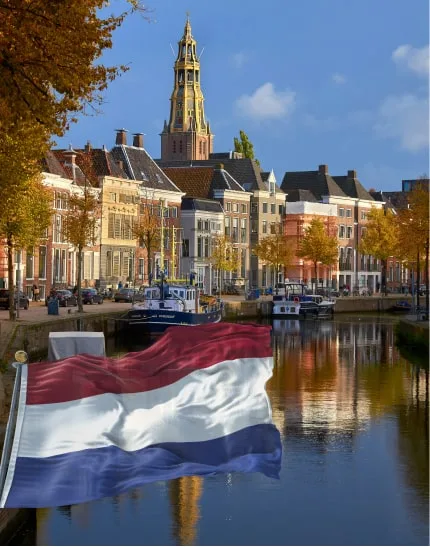
Advantages of obtaining a gambling license in the Netherlands
Obtaining a Dutch gambling license is a real entry point into the stable white market of the EU. Since 2021, following the launch of the Remote Gambling Act KOA, online casinos, betting, and poker have been operating under clear rules under the supervision of the regulator. The main advantages of the jurisdiction are:
- Legal entry into the EU market with connections to banks and payment providers. This reduces the risk of blocking and payment delays.
- Player trust and protection through CRUKS limits and behavioral monitoring.
- Operating within the legal framework and reducing sanction risks.
- Product flexibility. The KOA framework covers operator-based games, peer-to-peer poker, sports betting, and horse racing. It is possible to combine categories in one application.
- Marketing in the white space while complying with the rules. Please note that there is a ban on untargeted advertising and restrictions on sports sponsorship from 2025. Therefore, the focus is on performance channels and PR.
- Regulatory stability and predictable economic conditions. License term of up to five years, taxation based on GGR, and clear reporting. Based on this, the high entry threshold and compliance protect your market share.
Requirements for obtaining a gambling license in the Netherlands
Key requirements for companies applying for a Dutch gambling license:
- You need to register your company in one of the EU or EEA countries and confirm its financial stability with documents.
- You must pay a state fee of €48,000 and provide a financial guarantee of €50,000.
- The company must prepare a package of documents in Dutch in high-quality PDF format with text recognition capability.
- It is important to ensure a minimum share capital of €800,000.
- The company’s office must be located within the EU or EEA.
- Your company must implement KYC and AML procedures to identify players and monitor transactions.
- Implement age verification and prevent persons under the age of 18 from gambling.
- Your technical staff must connect to CRUKS, the national player self-exclusion register
- It is important to obtain technical certification for gaming software, payment systems, and RNG
- Key servers and data must be located in the EU
- Your company must comply with strict advertising and promotion rules
Request more information about the Netherlands Gambling License
Process of obtaining a gambling license in the Netherlands
Obtaining a Dutch gambling license is a strictly regulated procedure that requires reliable financial preparation, impeccable documentation, and confirmation of compliance with the regulator’s technical requirements. The process is divided into several consecutive stages, each of which must be completed without errors to avoid delays and refusals:
Step 1: Preparatory work
The operator must select the required type of license and establish a financial foundation. According to the regulations, the minimum capital requirement is €800,000; €48,000 in state fees and €50,000 in collateral must also be added to this amount.
At this stage, it is advisable to develop a detailed business plan, establish the corporate structure, and implement an internal control framework.
Step 2: Company registration
First, you need to register a legal entity in one of the countries of the European Union or the European Economic Area. You will need a bank account, a tax identification number, and founding documents. This legal basis will serve as the foundation for applying for a license.
Step 3: Preparing documentation
A complete set of documents is prepared, including:
- Constitution documents and supporting registration certificate
- Financial statements and supporting information on capital
- Detailed information about owners and directors
- Official confirmation that none of the beneficiaries have criminal records or pending charges.
- Business plan and detailed description of the organizational structure
- Agreements with payment system providers and technical partners.
All documents must be translated into Dutch and uploaded in PDF format with OCR at a resolution of at least 300 dpi.
Step 4: Development of internal policies
During the preparation phase, the company must develop comprehensive AML/KYC procedures, including enhanced due diligence and sanctions screening; a responsible gambling program with set limits and the option of self-exclusion is developed; and a GDPR compliance policy and advertising rules are developed in accordance with Dutch restrictions.
Step 5: Technical preparation.
At this stage, RNG and gaming products are being certified, payment solutions are being connected, and servers are being located in EU countries. Integration with the CRUKS and Age Verification systems is mandatory. This requirement is a prerequisite for admission to the application process.
Step 6: Application to the Kansspelautoriteit
Once the documents have been prepared, the operator proceeds to fill out the form on the regulator’s portal. At the same time, a payment of €48,000 is made, and a deposit of €50,000 is paid.

After the final platform check, the company is ready to enter the Dutch market. The regulator requires ongoing compliance, periodic reporting, and timely tax payments.
Types of gambling license in the Netherlands
| License type | What it includes | Format | Examples |
|---|---|---|---|
| Casino games against the operator | Slots, roulette, blackjack | Online and offline | Online casinos, land-based venues |
| Peer-to-peer games | Poker and other games between players | Online | Online poker, tournaments |
| Sports betting | Fixed odds, pools, betting exchanges | Online and offline | Bookmaker platforms, betting shops |
| Horse racing and harness racing betting | Betting on race results | Online and offline | Bookmakers, totalizators |
Regulation of online gambling in the Netherlands
Gambling in the Netherlands is regulated by an independent government agency, the Kansspelautoriteit (KSA). It controls both land-based and online gambling, issues gambling licenses in the Netherlands, monitors compliance with legislation, protects the interests of players, and prevents illegal activities. The system is based on a clear legislative framework and strict rules, making the Dutch market one of the most organized gambling jurisdictions in Europe.
Key laws regulating gambling in the Netherlands
The main law on gambling, first adopted in 1964 and has been updated several times. Regulates all forms of gambling in the Netherlands.
- Wet Kansspelen op Afstand (Remote Gambling Law)
The main law regulating online gambling which came into force on October 1, 2021. It legalized online casinos, sports betting, and other forms of remote gambling.
- Mandatory license for all online gambling operators
- Applies to both Dutch and foreign operators
- The license is issued for a maximum of 5 years
- Four categories of licenses, depending on the type of gambling
- Betting and Gambling Act
The current regulatory framework combines licensing, monitoring, and consumer protection requirements.
- Wet Maatregelen Kansspelbeleid (Gambling Policy Measures Act)
A law regulating player protection measures, including deposit limits, self-exclusion, and responsible gambling requirements.
- Algemene Verordening Gegevensbescherming (GDPR)
European data protection regulation applies to all operators in the Netherlands. Requires data encryption, consent for processing, and notification in the event of leaks.
- Anti-Money Laundering and Counterterrorism Financing Act (WWFT)
The Anti-Money Laundering and Counter-Terrorism Financing Act (WWFT) requires operators to:
- Know Your Customer (KYC) checks
- Monitor suspicious activity
- Report large transactions
- Sanctions screening (OFAC)
Powers and functions of the KSA
| Description | Regulatory Authority | |
|---|---|---|
| Licensing | All operators operating in the country are required to obtain a license | Kansspelautoriteit (KSA) |
| Basic Law | Wet op de kansspelen defines general rules and requirements | KSA |
| Online Gambling | KOA regulates online operators, including security requirements, KYC, and CRUKS | KSA |
| AML and player protection | Requires identity verification, source of funds verification, and transaction monitoring | KSA and financial authorities |
| Advertising | Restricts targeting, prohibits mass advertising, and the use of celebrities | KSA |
| CRUKS | All operators are required to connect to the player self-exclusion register | KSA |
| Sanctions | Violations are punishable by fines and license revocation | KSA |
Thus, the Kansspelautoriteit (KSA) serves as the sole regulatory authority for the Dutch gambling market. The system is based on strict laws and European transparency standards, which ensure stability for operators and a high level of protection for players.
Conclusion
The Dutch gambling market is considered one of the most orderly and transparent in Europe. The official KSA license issued by the Kansspelautoriteit gives operators access to a strictly regulated field where the rules are spelled out in detail, the standards are strict, and the interests of both businesses and players are reliably protected.
Since 2021, following the entry into force of the Wet Kansspelen op Afstand law, online gambling has been fully legalized. Now, any operator planning to serve a Dutch audience is required to obtain a KOA license, undergo financial and technical verification, implement AML/KYC procedures, and connect to the CRUKS system.
Unlicensed activity is strictly prohibited and carries serious penalties. At the same time, it is impossible to license a business without thorough preparation. It is necessary to ensure financial stability, collect a complete set of documents in Dutch, undergo technical certification, and comply with all regulatory requirements.
Gofaizen & Sherle lawyers accompany clients from the initial registration of the company and preparation of all necessary documents to the submission of the application and obtaining a gambling license in the Netherlands. This approach eliminates bureaucratic delays and enables businesses to swiftly enter one of the most promising markets in Europe.
FAQ about Gambling License in the Netherlands
Who issues gambling licenses in the Netherlands?
Gambling licenses in the Netherlands are issued by the Kansspelautoriteit. This regulator controls the entire gambling industry, checks operators, protects players, and ensures market transparency.
What is the legal basis for online gambling in the Netherlands?
The basis for obtaining a gambling license in the Netherlands is the Wet Kansspelen op Afstand. The law came into force in 2021 and opened up access to legal online gambling, subject to obtaining an official license.
Which types of gambling are covered by the KOA license?
The Dutch gambling license covers a wide range of formats, including online casinos, peer-to-peer games, sports betting, and horse racing betting. This allows operators to flexibly develop their business within the legal framework.
What is the application fee for the license?
To apply for a KSA license, there is a fee of €48,000 and a mandatory deposit of €50,000. These funds serve as a financial guarantee for the regulator and confirmation of the operator’s serious intentions.
Connect with our experts
Our experts will tell you how to do it as quickly and easily as possible.


By clicking the button, I confirm that I have read the privacy policy and consent to the collection and processing of my personal data in accordance with the GDPR rules.